
Winter Solstice at the Table
Malvasia, Venice, and the quiet return of light

December is the month I love most.
Not for the holidays, but for the Winter Solstice—when darkness reaches its deepest point and, quietly, light begins its return.
It is a moment that calls for attention, warmth, and careful choices.
At Winter Table, I have imagined two Malvasias and two gastronomic pairings to accompany this passage. Wines and foods that speak of depth, waiting, and true winter.
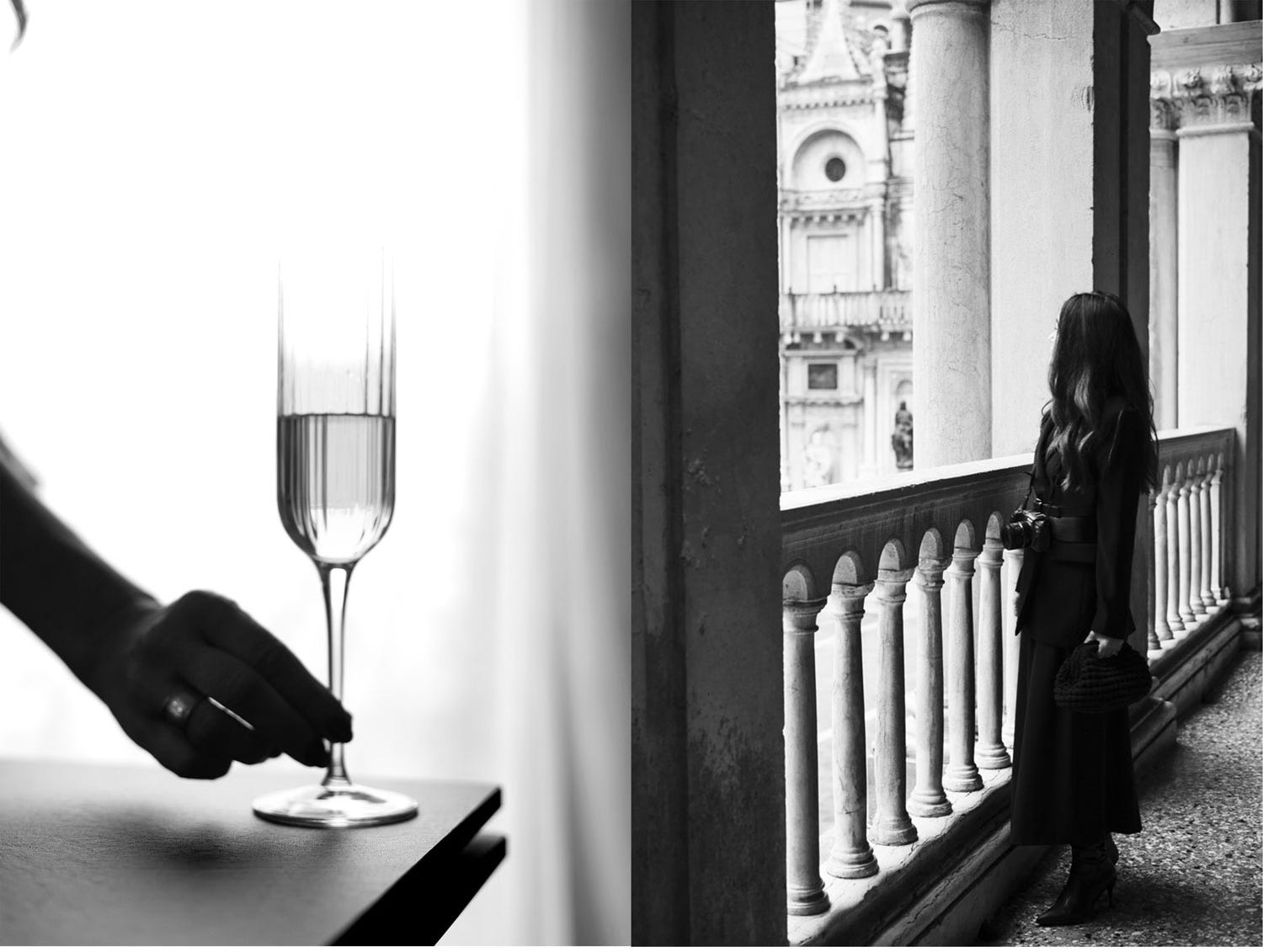
Malvasia is a complex and expansive name.
A name that carries a centuries-old history and finds its symbolic center in Venice.
It was Venice that gave Malvasia its name, transforming wines from Eastern Europe into myth, cult, and status symbol. Malvasia was not simply a wine, but a very precise idea of wine, synonymous with preciousness, desire, and the Orient. A wine that spoke of journeys, different cultures, trade routes, luxury, and distant visions.
Venice shaped this cult: Malvasia as a constellation of different wines, united not by geography but by aromatic and cultural power, by a natural sweetness, and by an extraordinary character that is both Mediterranean and Eastern.
Today, Malvasias in Italy are numerous and profoundly diverse, spread across the entire peninsula. My journey begins here and continues through Italy, telling their stories one by one through images, colors, landscapes, wine narratives, and gastronomic memories.
In this early winter, during the darkest and shortest days of the year, around the suspended time of the Solstice, I invite you to discover two Malvasias and two gastronomic suggestions—wines and pairings conceived for a table that is intimate, conscious, and essential.
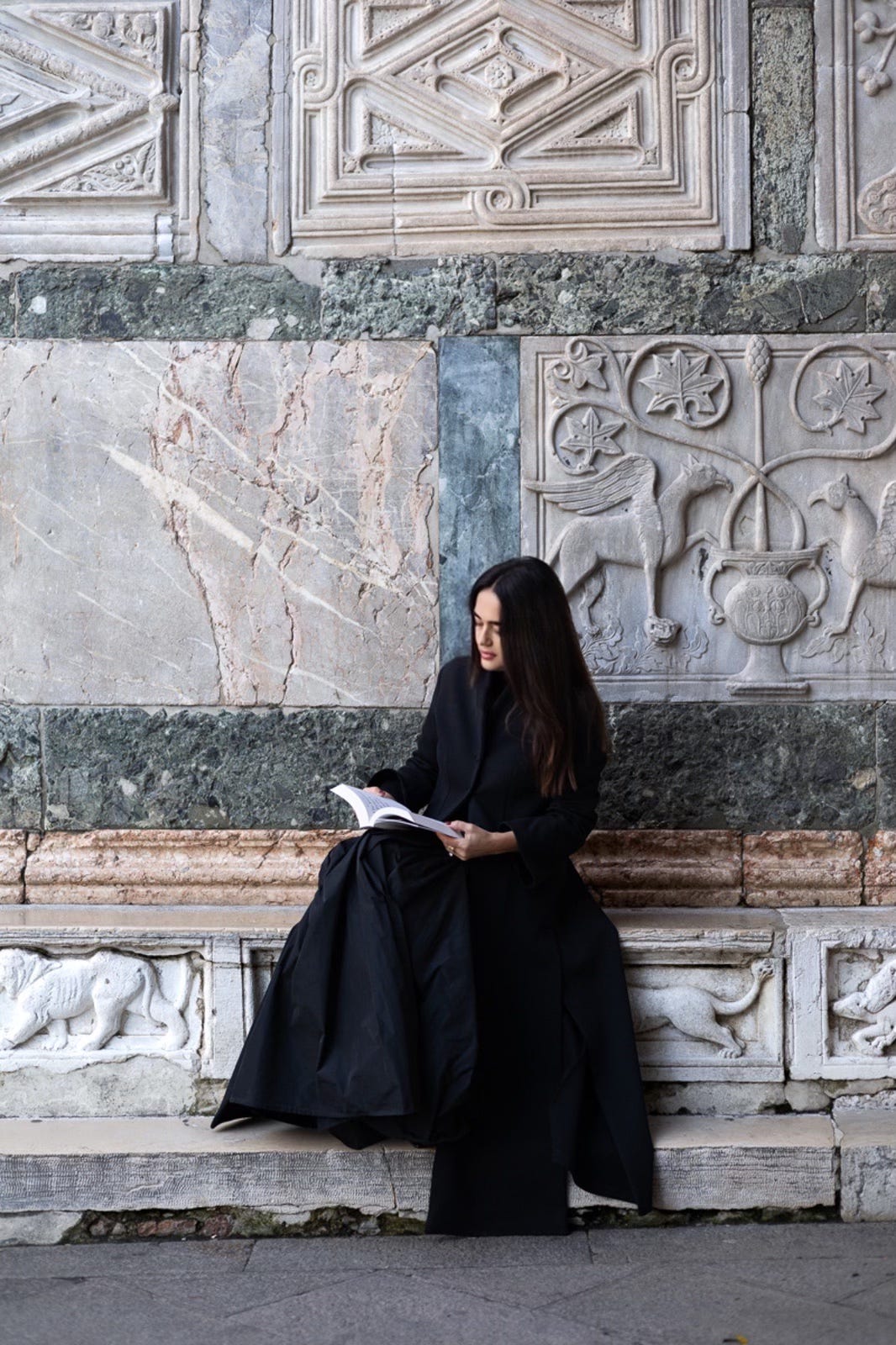
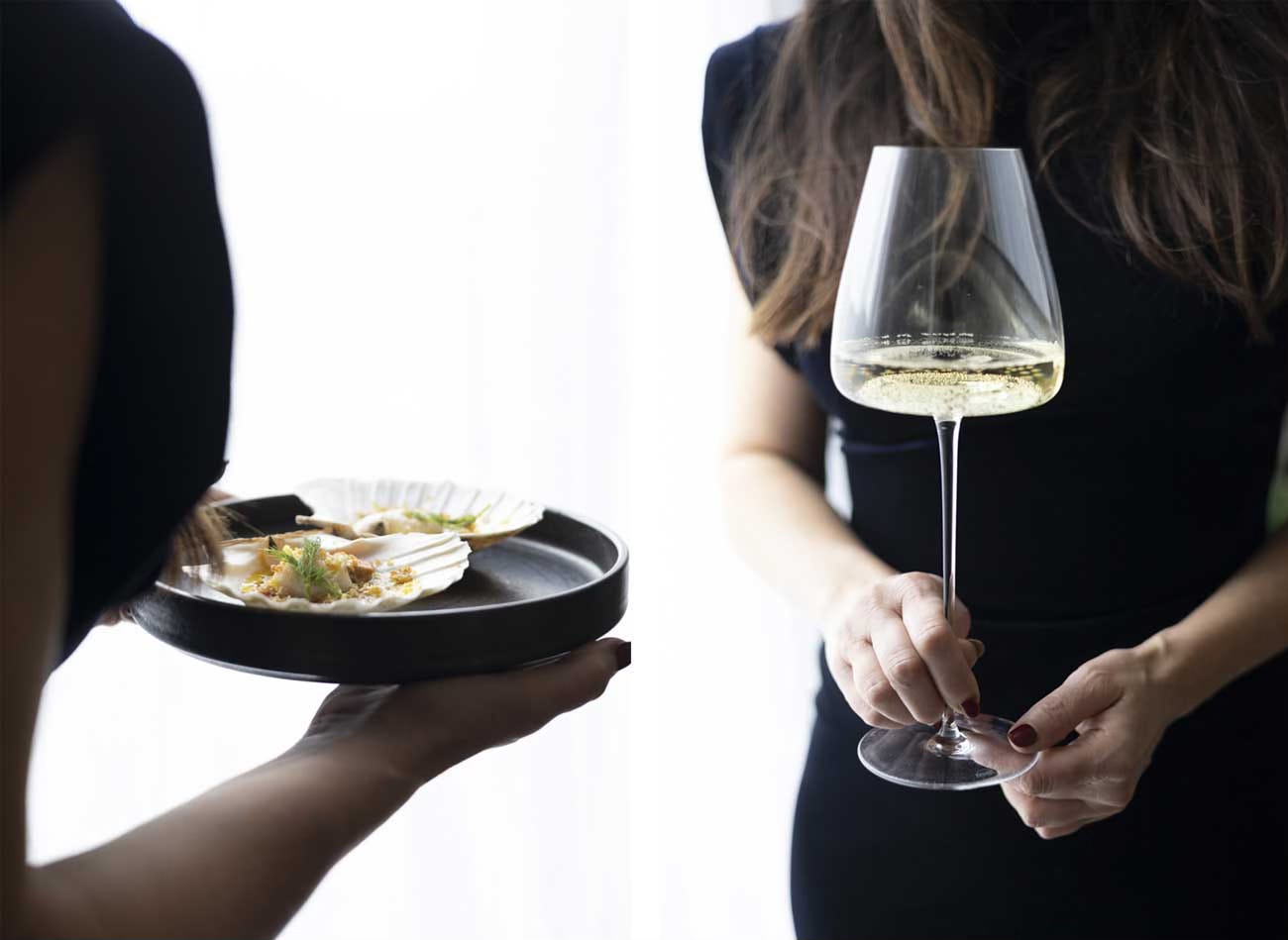
Oven-baked scallops and Malvasia Istriana: a December must. A pairing that speaks of winter sea, simplicity, and cold light in the glass.
The scallop is one of the most precious flavours of the Upper Adriatic.
In Venice it arrives mainly in winter, when the cold sea makes it sweeter, firmer, more essential. For centuries it has appeared on the city’s tables during the quieter months, when light is low and choices are measured.
I prepare it baked, with lightly herb-scented bread, a barely perceptible touch of anchovy, and lemon zest. Few elements, carefully calibrated. The sea, salinity, a citrus vibration that brightens the bite without overwhelming it. A dish that tells the story of the Venetian winter with discretion, without excess.
In the glass, I choose a wine capable of the same restraint.
Our journey in search of Italian Malvasias begins in the North-East, in a fascinating borderland where different cultures have coexisted for centuries. A crossroads of peoples, languages and traditions that has left deep traces in the wine as well.
Across the plains and gentle hills of Friuli we find Malvasia Istriana, one of the most renowned and appreciated neutral white grape varieties, capable of a quiet, understated elegance. Its grapes, seemingly low in aroma, give rise to wines of great quality and complexity, where harmony and roundness meet freshness, salinity and a subtle marine tension.
In the glass, Malvasia Istriana Caneva Canaregio: fresh, saline, citrus-driven, elegant. A wine born between Caorle and Lison Pramaggiore, along the same Upper Adriatic waters that shelter these scallops.
A natural, almost inevitable pairing, where wine and food share a common origin.
No forcing, only recognition: the territory returning in both the plate and the glass, in balance.
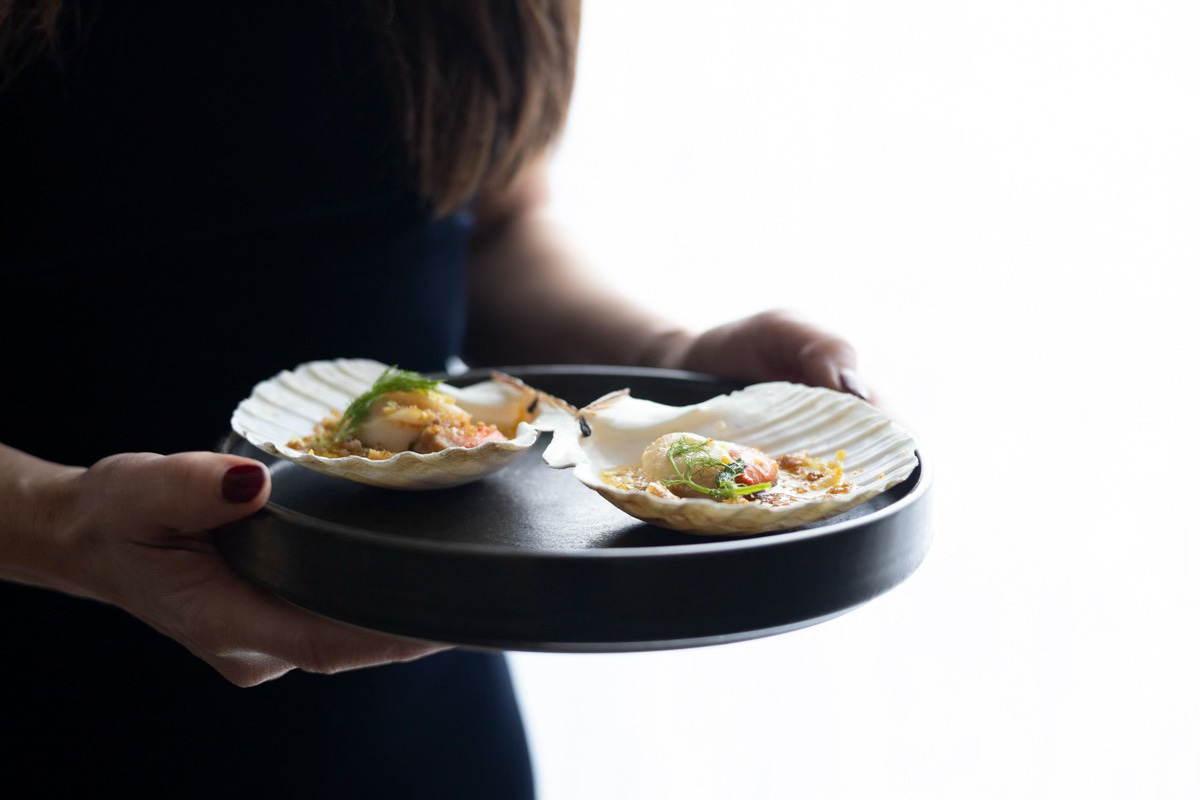
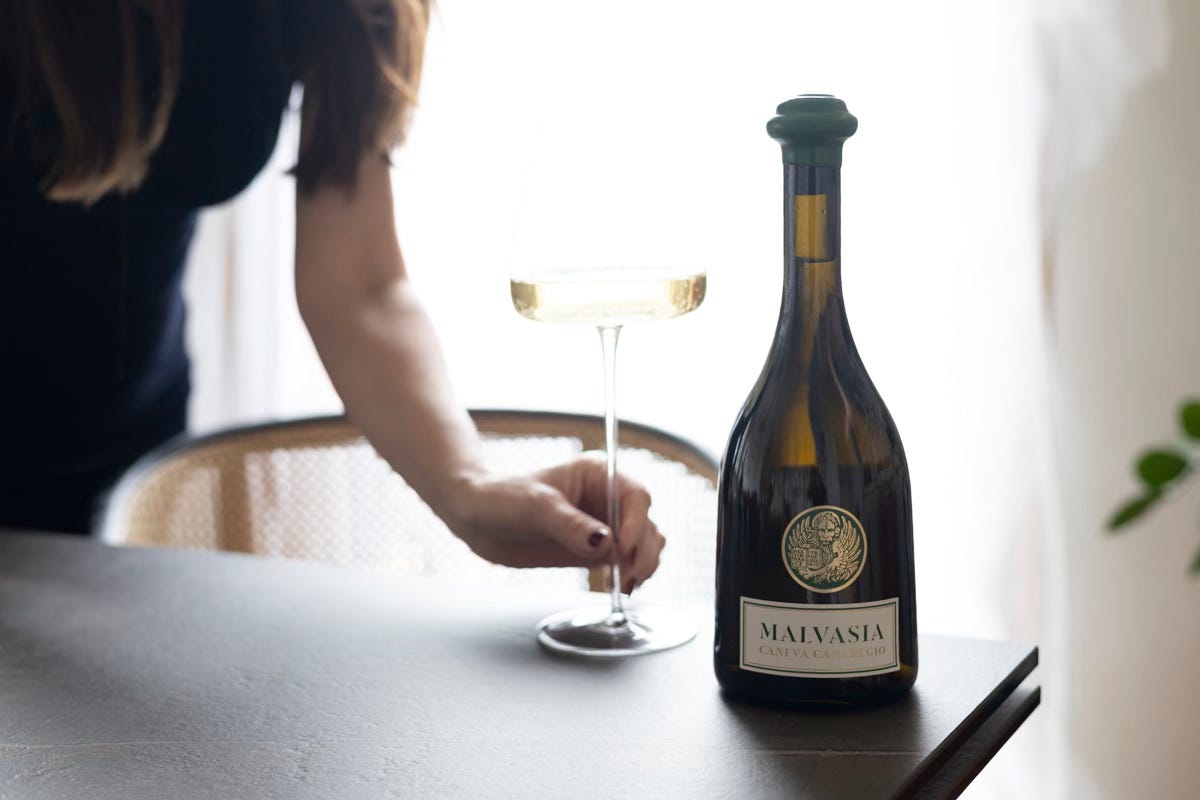
From the Upper Adriatic, our journey moves south, crossing the sea toward Sardinia, to one of the most intimate and rare expressions of Italian Malvasia.
Malvasia di Bosa is a wine shaped by time, air, and patience.
An ancient Mediterranean variety that today survives in a very small area along the western coast of the island, around the town of Bosa. Here, vineyards face the sea, and the wine evolves slowly in quiet cellars, often in partially filled barrels, under a delicate veil of flor.
This is not a wine of immediacy.
It is a wine of waiting.
Dry, oxidative, and profound, Malvasia di Bosa develops notes of almond, dried herbs, citrus peel, iodine, and a subtle bitter edge. Its structure is austere yet expansive, capable of holding tension and depth without ever becoming heavy. A wine that asks for silence, attention, and time.
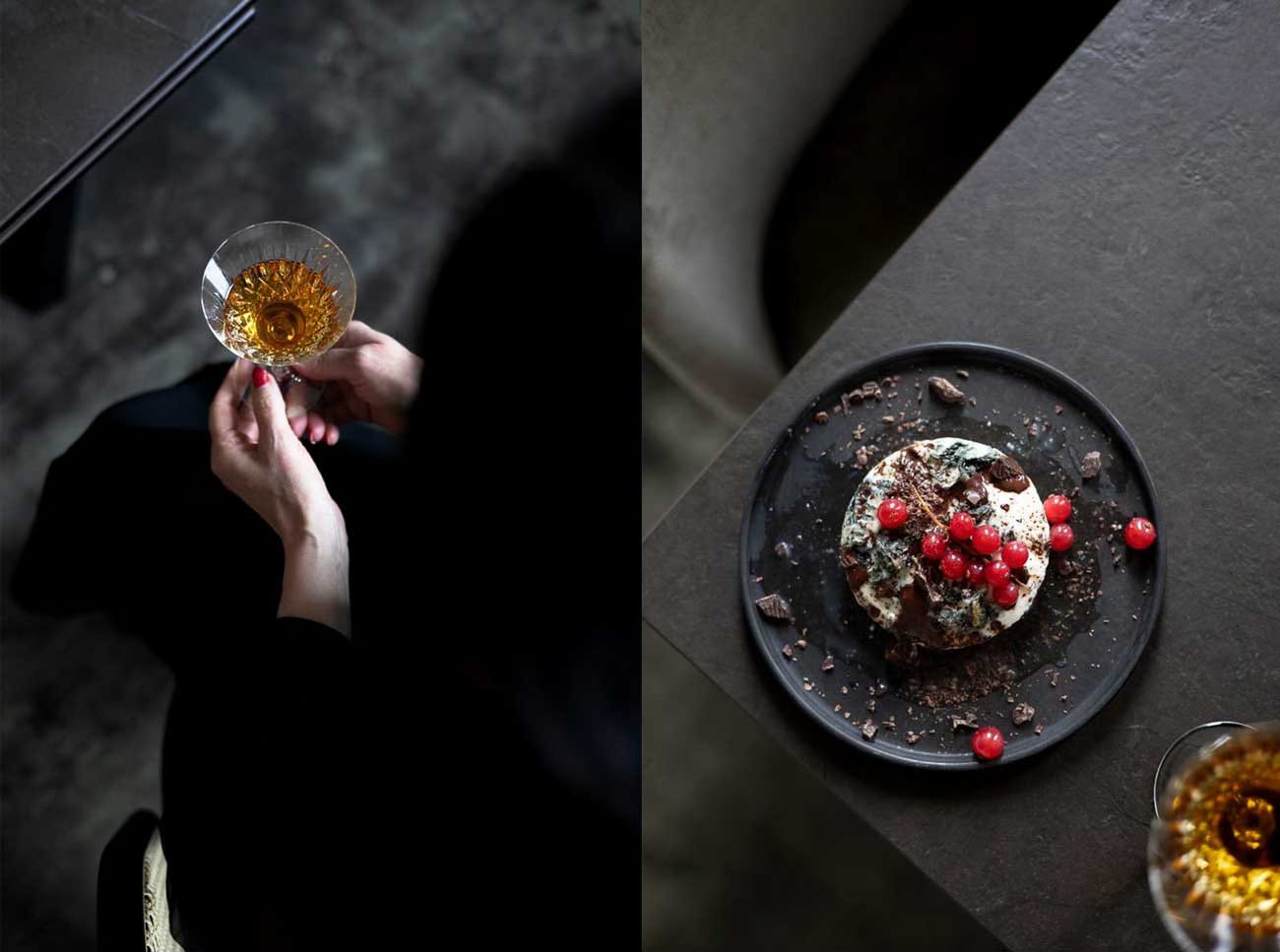
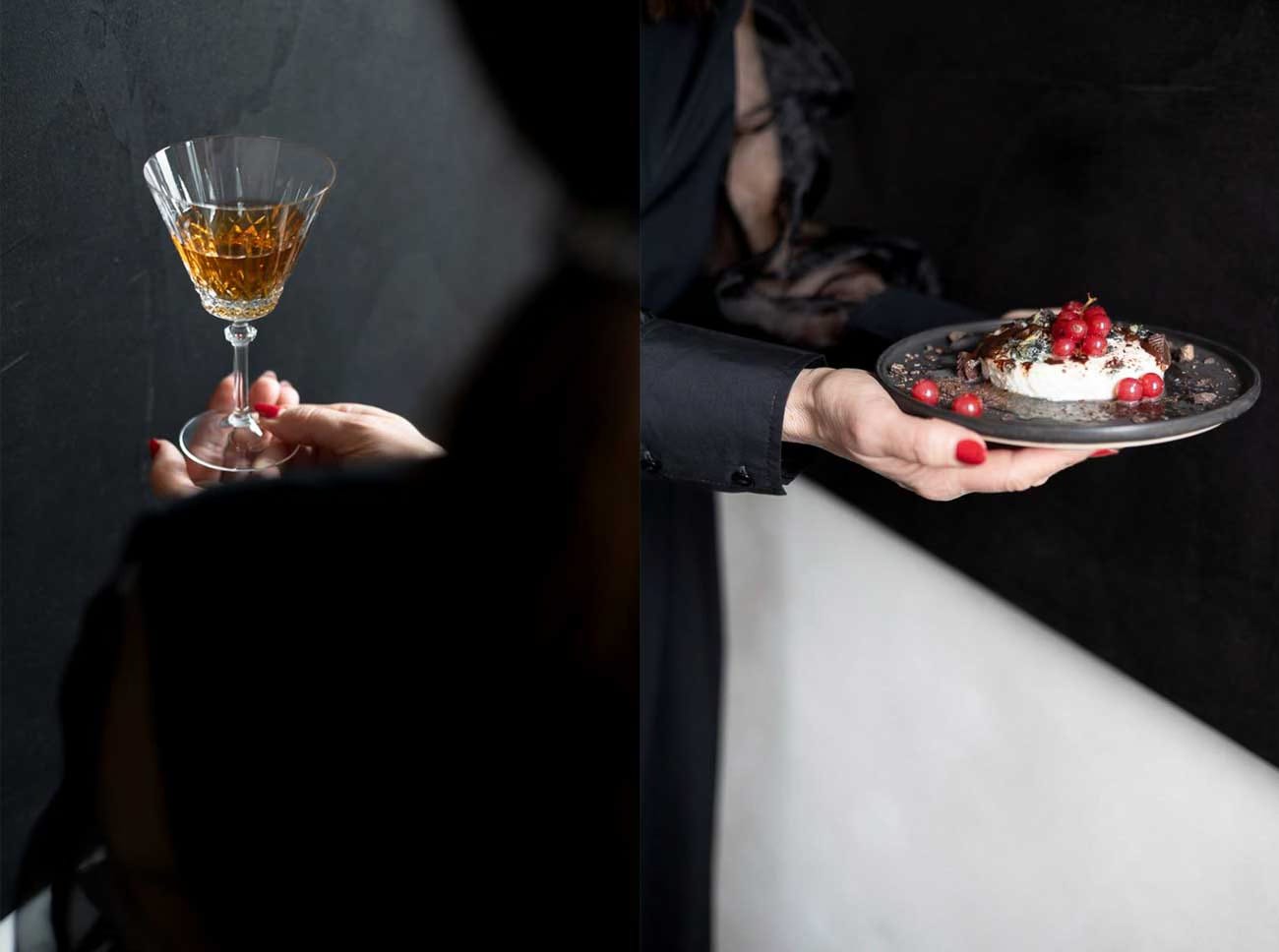
In the glass, Malvasia di Bosa Riserva 2017, Cantina Columbu.
For this wine, I chose a pairing built on contrast rather than harmony.
A baked blue sheep’s milk cheese (Roquefort), intense and saline, softened by whipped cream. Dark chocolate at 90%, bitter and resonant, amplifies the wine’s oxidative and savory notes, while a touch of red currant introduces acidity—cutting through richness and restoring verticality to the pairing.
Sweetness is never dominant here. Everything is measured: bitterness, salt, fat, acidity.
A pairing conceived to accompany the wine rather than tame it, allowing Malvasia di Bosa to remain at the center—complex, introspective, and persistent. A winter wine for a table that embraces depth and contradiction, capable of holding darkness while waiting for light to return.
Winter tables do not need abundance.
They need presence, patience, and a gaze that dares to go beyond the horizon—where darkness softens, and light, silently, begins again.
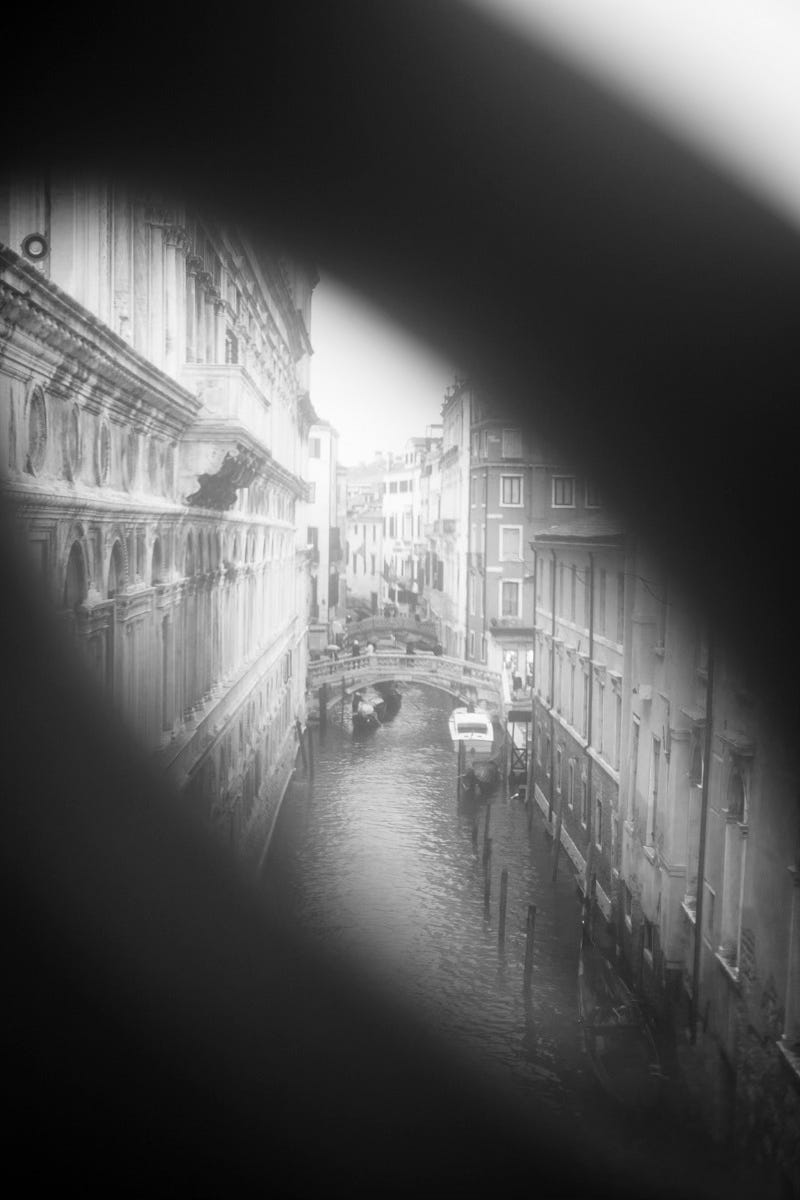
In Venice, winter light rests low on the lagoon. It moves slowly, like a tide, teaching us to wait— and to set the table only for what truly matters.
Laura Riolfatto
Wine storyteller & sommelier
🔗 laurariolfatto.com
🍷 Malvasia Pop Up
📍 Venice / Innichen