
Venetian Red is not simply a pigment, but a form of identity. In ancient times, red was one of the colours of power, authority and beauty, and Venice inherited its symbolic legacy and transformed it into a language of its own, a language of the lagoon. Here, red has never been just a colour, but temperature, memory and a living surface.
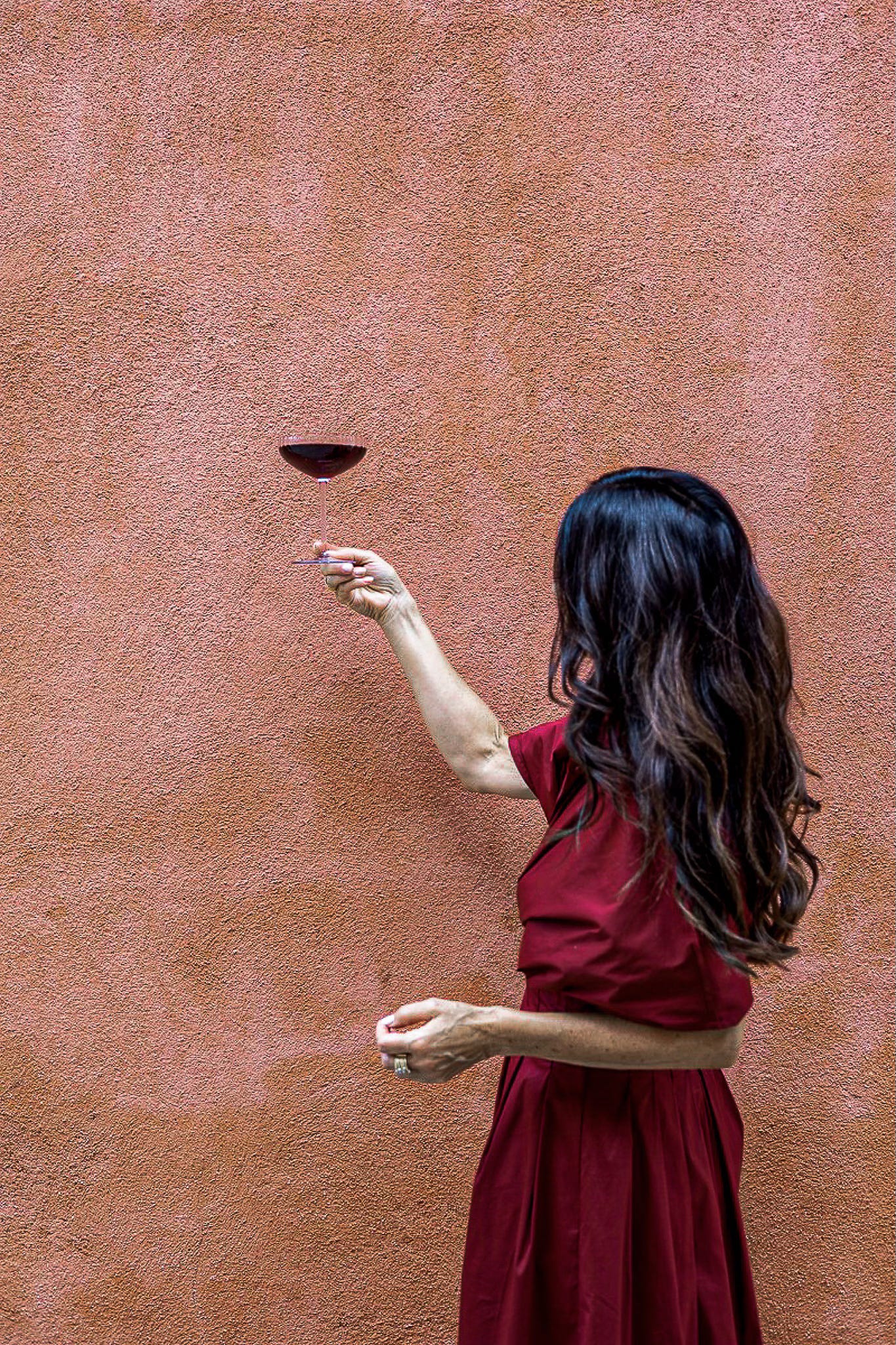
You only need to walk through the calli and campi to notice it, Venice is a city that has also been built through colour. The plaster of its houses, from brick red to terracotta and antique pink turning orange during the warmest hours of the day, is not an aesthetic affectation, but the result of centuries of oxides, local pigments and ground brick dust mixed with lime. It is a red that comes from the very substance of the lagoon, from clay, mud and the same earth on which the city was built, and which the water, reflecting it, continually multiplies and transforms. There is no hour of the day when this red remains exactly the same: at dawn it is pale and powdery, at midday it brightens, at sunset it burns.
It is not surprising that this very city gave birth to a school of painting capable of making red one of its most profound languages. In the sixteenth century, the wealth and prestige of the Serenissima were also reflected in its culture of colour, a luminous, warm red, deeper than scarlet, developed through the refined knowledge of Venetian dyers and workshops even before it became painting. Tiziano gave it a body, the red that warms the skin of the Venus of Urbino, that lights up the robes in his altarpieces as if it were blood and light together. Tintoretto filled it with shadow and movement, almost theatrical. Veronese transformed it into ceremonial splendour, in his great painted banquets, in the sumptuous clothes of his figures, a red that knows no restraint but only pure celebration. A colour that belongs not only to the palette, but to the very history of the city.


Before entering paintings, red was fabric, velvet, banner, privilege, trade and craftsmanship. For centuries, Venice was one of the most important centres of dyeing in the world, capable of producing intense and lasting reds thanks to raw materials arriving from distant lands: cochineal, madder and precious lake pigments traded along the same merchant routes that carried spices and wine. To wear red in Venice meant wearing a privilege: only certain social classes could afford certain shades, certain heavy velvets, certain silks that captured the light in a way unlike any other fabric.
After following red through Venice, I find it again in a Venini glass, and this time, in a red Malvasia.


Among the nineteen grape varieties that carry the name Malvasia in Italy, Malvasia di Casorzo is one of the rarest and most distinctive. It is an aromatic black grape, traditionally vinified as a sweet wine, grown in a small area of Monferrato, in Piemonte, where a small Consortium continues to preserve its history, traditions and distinctive style. Its production is limited, its territory precise, and the wine it gives is unlike any other Malvasia I know.
And perhaps this is what makes it so fascinating. In the glass, Malvasia di Casorzo immediately reveals its difference, its colour is a luminous ruby red, brilliant and almost translucent. Then comes the perfume, rose, raspberry and redcurrant, followed by softer notes of peach and apricot. It is aromatic and sweet, yet freshness and lightness keep it vibrant, nothing feels heavy. The wine remains delicate, fragrant, almost suspended between a red wine and something more elusive.
The wine in my glass is Il Brigantino by Accornero, winegrowers in Vignale Monferrato since 1897, rooted in the white calcareous-marl soils that characterise these hills.
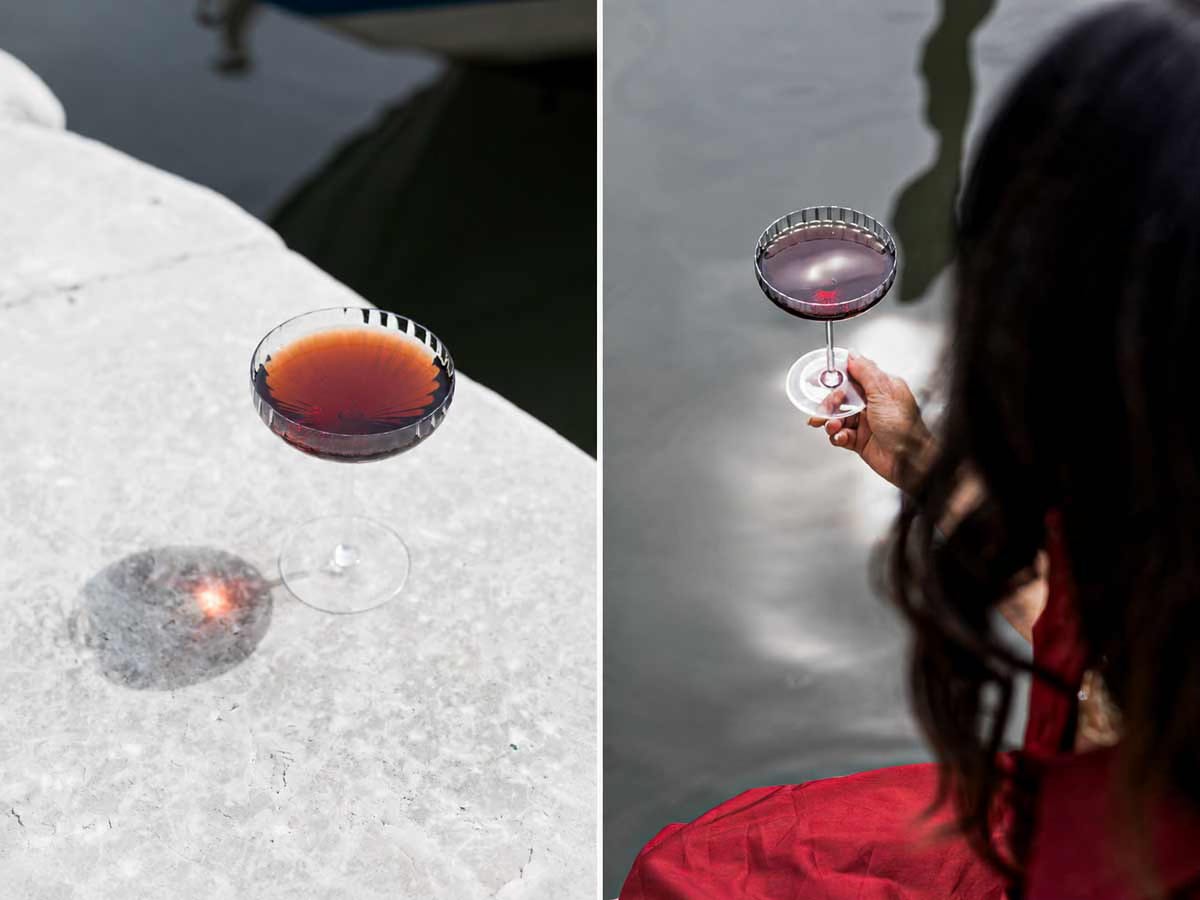
It is a remarkable wine, unique in its character. And every time I think of Malvasia di Casorzo, I think of Venetian Red.
Perhaps because its red is not static, it changes with the light. It can be ruby, crimson, almost transparent at the edge of the glass, then suddenly deeper and darker. It reminds me of the reds of Venice, the façades faded by salt and time, the velvets and damasks, the pigments of paintings, the lacquered interiors, the red that appears everywhere in the city without ever being exactly the same.
For this story, I wanted to bring that connection to the table. I paired Malvasia di Casorzo with baked Tabacchine peaches, amaretti biscuits, whipped cream, and a reduction of the wine itself. The fruit echoes its aromatic character, the almond adds a slightly bitter note, and the cream softens and binds everything together. A pairing that began with color, even before the flavor, a delicious combination, perfect for a summer day.
And so the story returns to the present with a red dress, a red house in Venice, a glass of Malvasia di Casorzo and a delicious dessert. The colour has travelled through plaster, fabrics, paintings and clothes. Now it is in the glass.
This time, Venetian Red can also be drunk.


In the glass
Brigantino
Malvasia di Casorzo DOC - 5% vol - 2024
Accornero, Vignale Monferrato (Alessandria)
Grape: 100% Malvasia di Casorzo - Vineyard: 216 m, east-facing
Style: aromatic, fresh and delicately sweet, with a vibrant fruity character
Pairing
Baked Pesche Tabacchine with amaretti, whipped cream and a Malvasia di Casorzo reduction.
🔗 laurariolfatto.com
🍷 Malvasia Pop Up™
📖 Table Stories
If you’d like to receive my letters and updates from Malvasia Pop Up, you can subscribe to the newsletter here: https://www.laurariolfatto.com/newsletter
I love Venetian red so much that I chose it as the colour of my own publication.
Belle parole e belle foto:)