
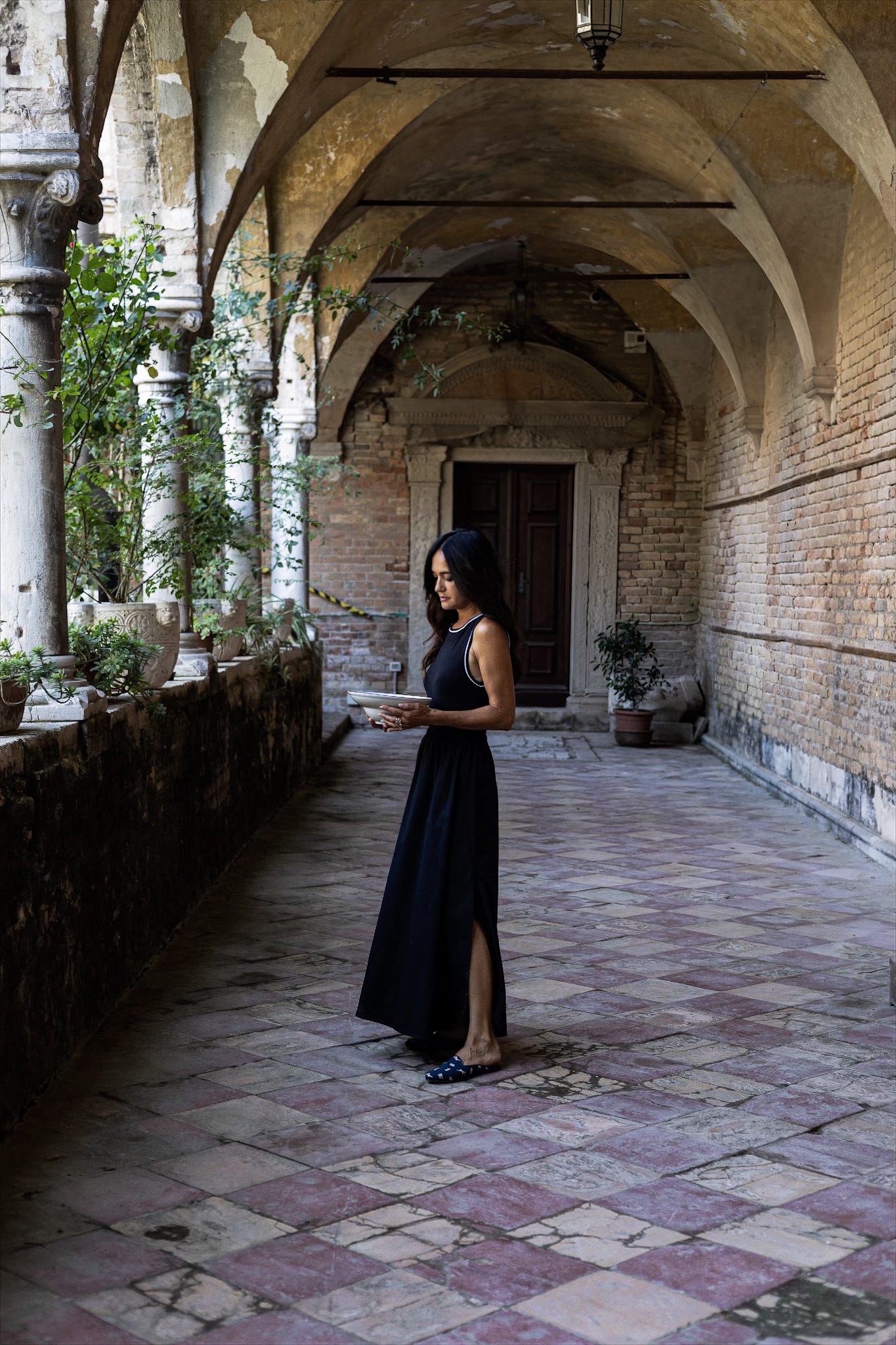
Once upon a time, there was a small piece of land at the edge of Venice. An island separated from the city, suspended between the lagoon and the sea, along a stretch of water crossed for centuries by pilgrims, sailors, merchants and travellers. Sant’Elena was a place of arrivals and departures. As early as the Middle Ages, a church and a hospice offered shelter on the island. In 1211, the relics of Saint Helena, mother of Emperor Constantine, arrived in Venice from Constantinople.
According to tradition, the ship carrying them ran aground near the island. The sailors lightened the vessel and it began to float again, but when the urn containing the relics was brought back on board, the ship became stranded once more.
It was taken as a sign, Sant’Elena had chosen her island.
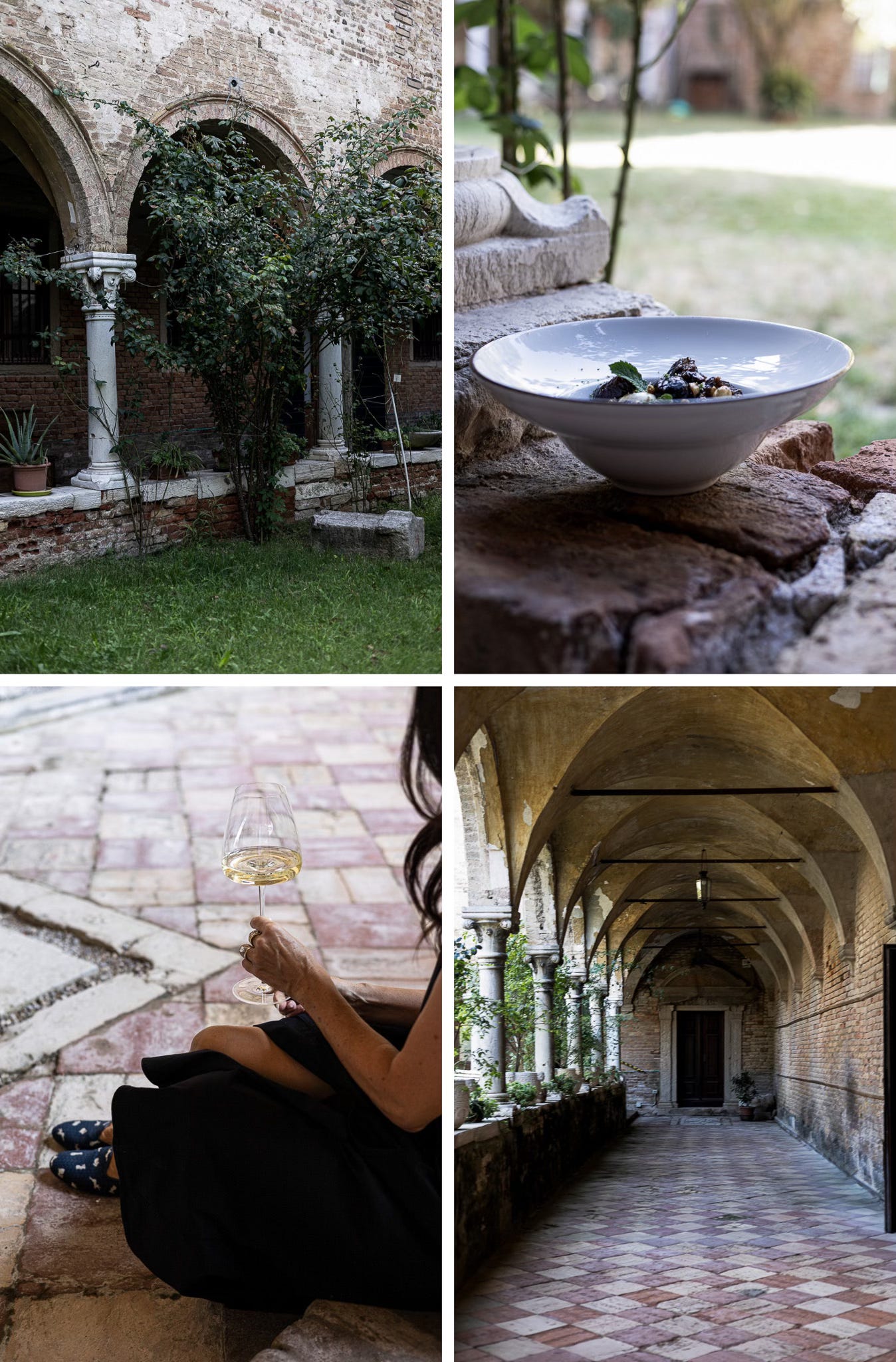
History and legend, as so often happens in Venice, begin to blur. The island became a destination for pilgrims and, over the centuries, the religious complex evolved into the secluded little world that still survives today at the eastern edge of Venice.
The church, the monastery, the cloister, the garden, the vegetable garden, the vineyard: a place enclosed by walls and, at the same time, open towards the lagoon. Even today, something changes as soon as you cross the threshold. Venice remains outside. Behind the walls grow vegetables, aromatic herbs and fruit trees, together with the old convent vineyard, now cultivated once again.
It is a different Venice, made not only of stone and water, but also of earth. And perhaps this is where the story begins to speak of wine.
From Constantinople to Venice
I find it fascinating that the relics of Saint Helena arrived here from Constantinople in 1211. From the East, Venice received not only people and relics, but textiles, spices, words, flavours and wine. Candia, the Morea, the islands of the Aegean, Constantinople, along this geography of routes travelled a name that would become profoundly Venetian.
Malvasia
A wine that came from afar and was embraced so deeply by the city that it even left its mark on the Venetian vocabulary: the malvasie became the places where these precious wines were traded and drunk. Perhaps this is what continues to fascinate me about Malvasia. They are not simply grape varieties; they are journeys. Names that change as they cross the Mediterranean, vines that adapt to different lands, wines that retain something of the places they come from and something of the places they encounter.
This is why returning to Sant’Elena with a bottle of Malvasia felt almost natural - as though I were bringing back to an ancient place of arrival a story that had, once again, travelled from afar.
The Secret Garden
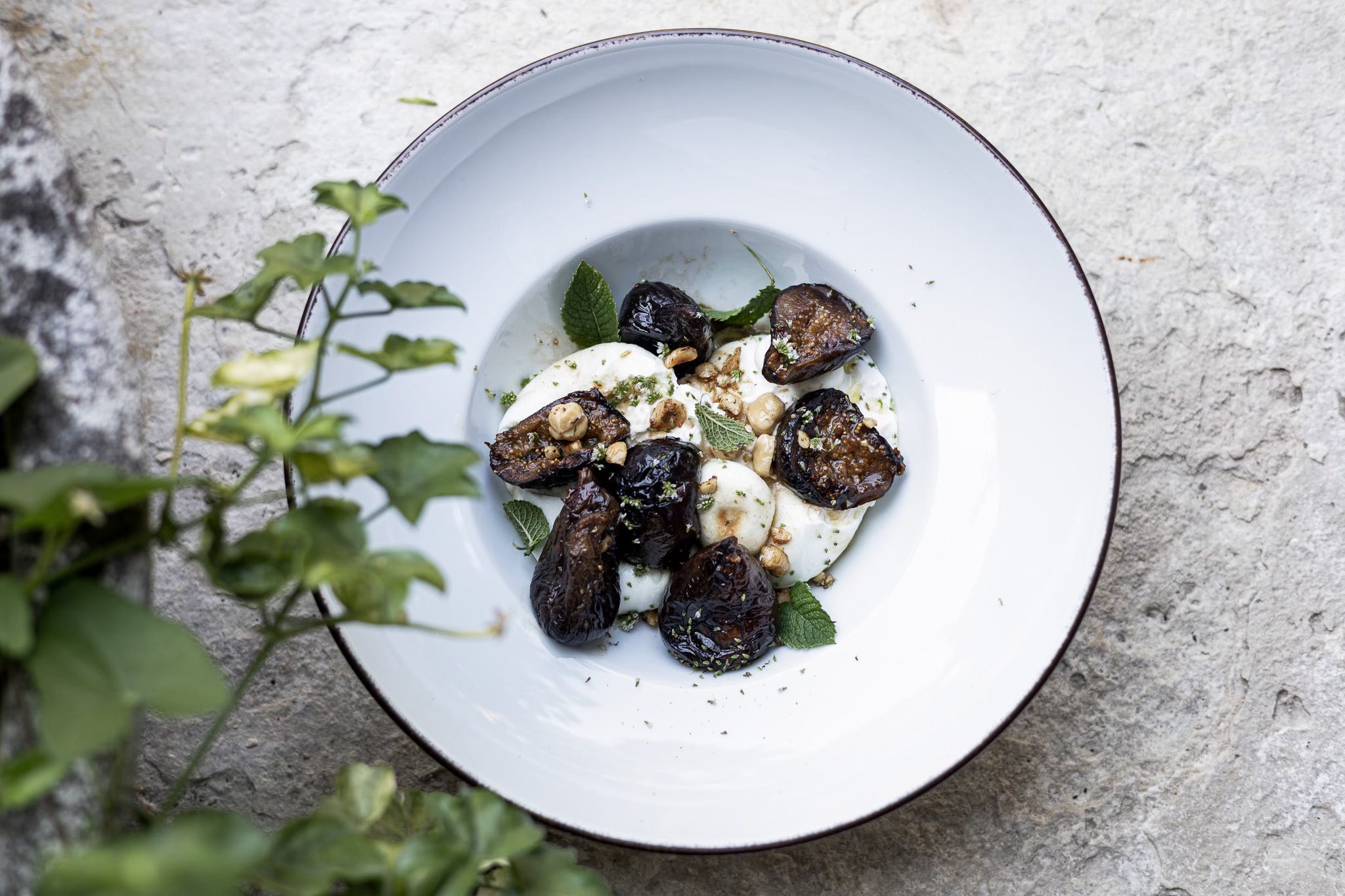
In August, the fig trees in the monastery garden were heavy with small, dark fruit. Their broad leaves cast deep shade, wild mint grew in the vegetable garden and, beyond the cloister, the vineyard quietly continued its season. The idea for the dish came directly from this landscape, something fresh and simple, able to capture the heat of summer and everything growing around me.
Buffalo burrata, roasted black figs, toasted hazelnuts, extra virgin olive oil, thyme and a few leaves of wild mint from the garden.
The heat makes the figs soft and almost creamy. Their sweetness meets the rich, milky texture of the burrata, toasted hazelnuts add crunch and depth, while thyme and wild mint bring the dish back to the green scents of the garden.
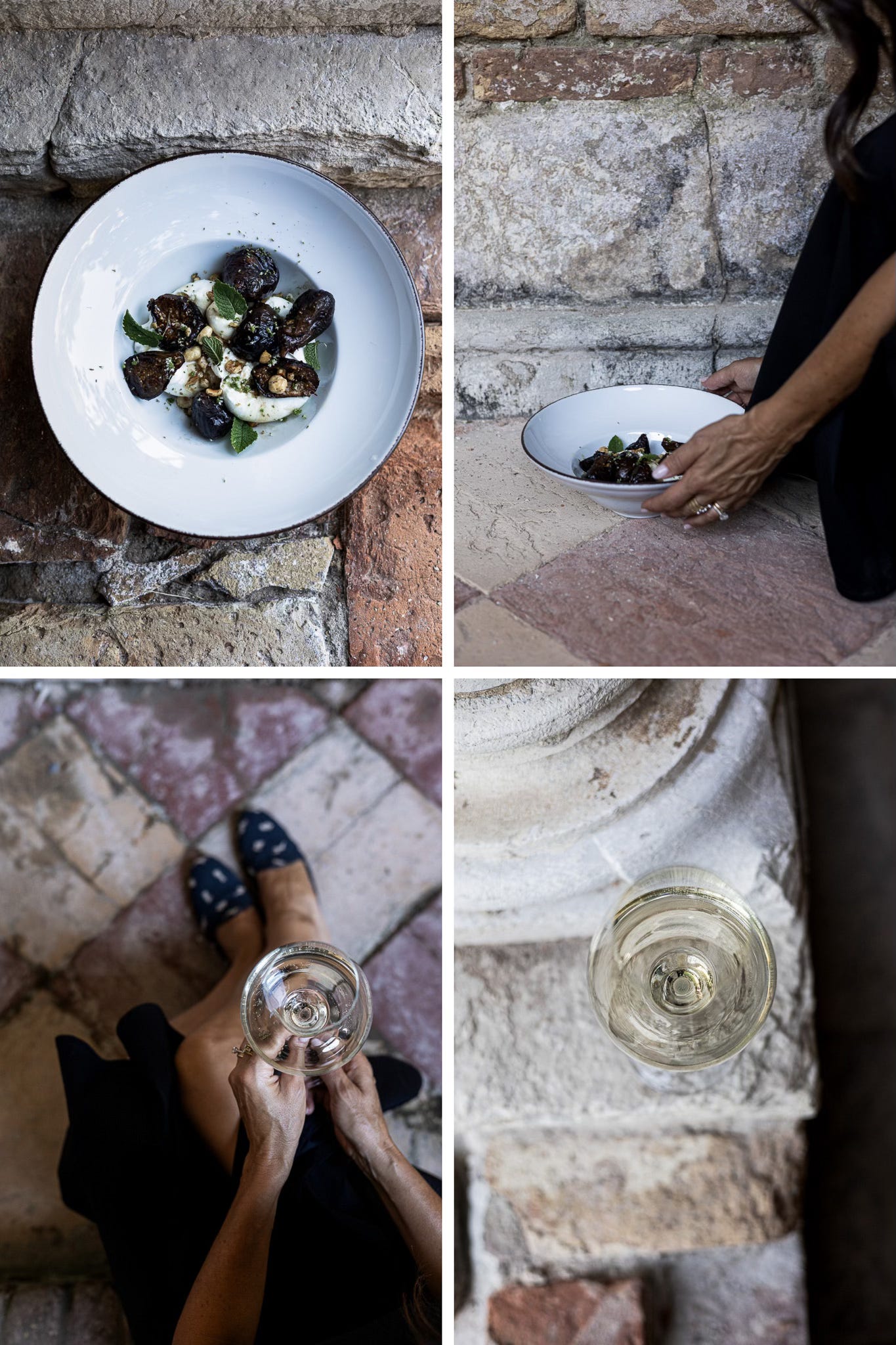
Alongside it, a Malvasia Bianca di Basilicata, produced by Cantina di Venosa in the Vulture area. This time, the journey begins in southern Italy, in a volcanic landscape, rugged and luminous, far from the waters of the Venetian lagoon. An aromatic Malvasia travelling north to Venice to meet the figs, herbs and garden of Sant’Elena.
On the nose, yellow flowers, ripe fruit and aromatic herbs. On the palate, it becomes surprisingly soft and buttery, with a generous texture balanced by a lovely savoury freshness. And with the roasted fig, something simply clicks: its sweetness and caramelised notes meet the wine’s softness, while that saline edge keeps everything vibrant. A pairing that feels almost inevitable.
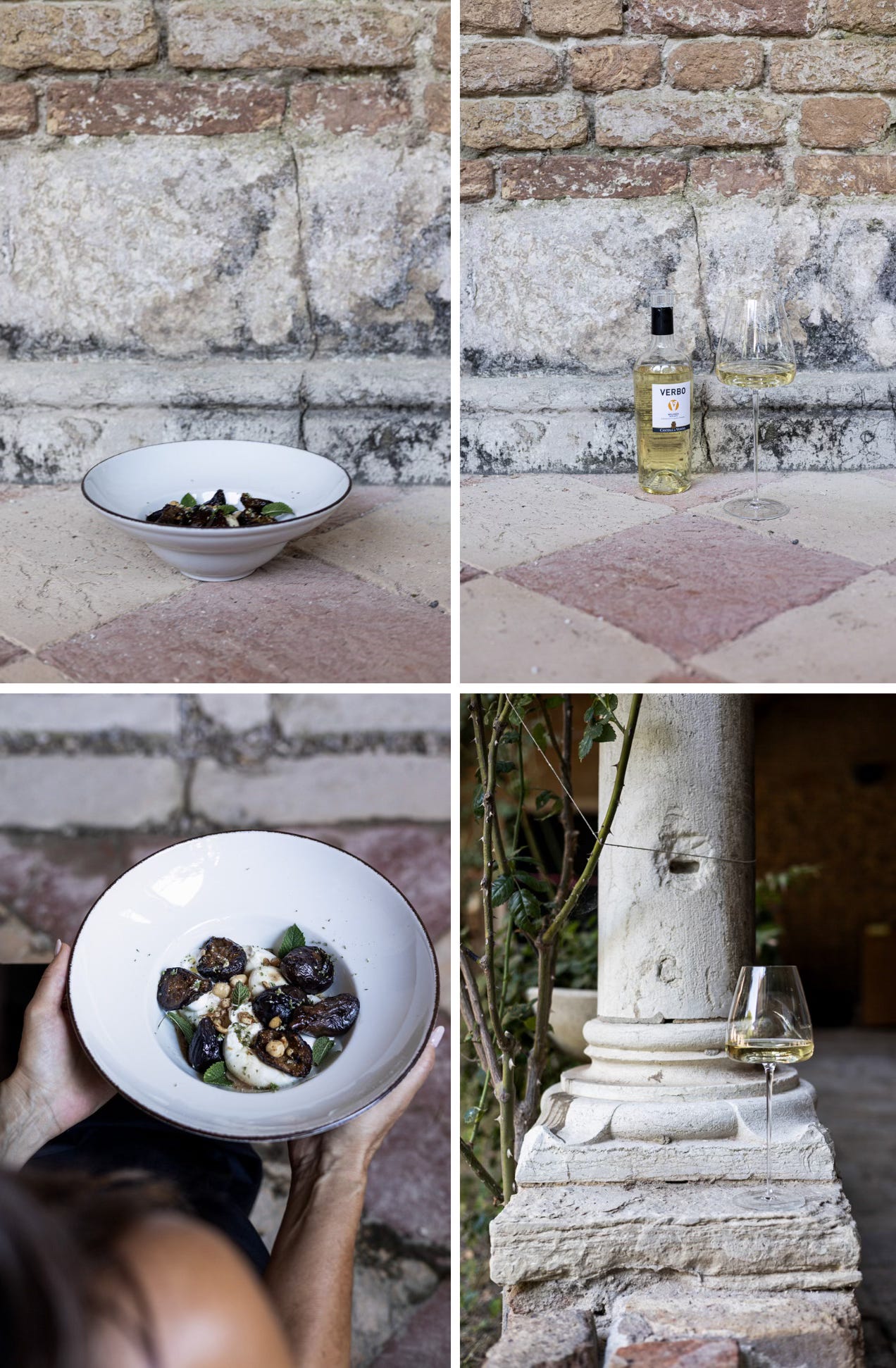
This is how I like to tell the story of wine: not as something to be isolated and analysed only in the glass, but as a language capable of connecting distant places.
Basilicata and Venice. The Vulcan Vulture and the lagoon. A vineyard in southern Italy and an ancient vineyard hidden behind the walls of a Venetian monastery. An August fig and a glass of Malvasia.
Perhaps this is what Malvasia has always done: travel, arrive, take root and tell the story of the places it has crossed. And so, for one summer afternoon, in the secret garden of Sant’Elena, a Malvasia returned to Venice.
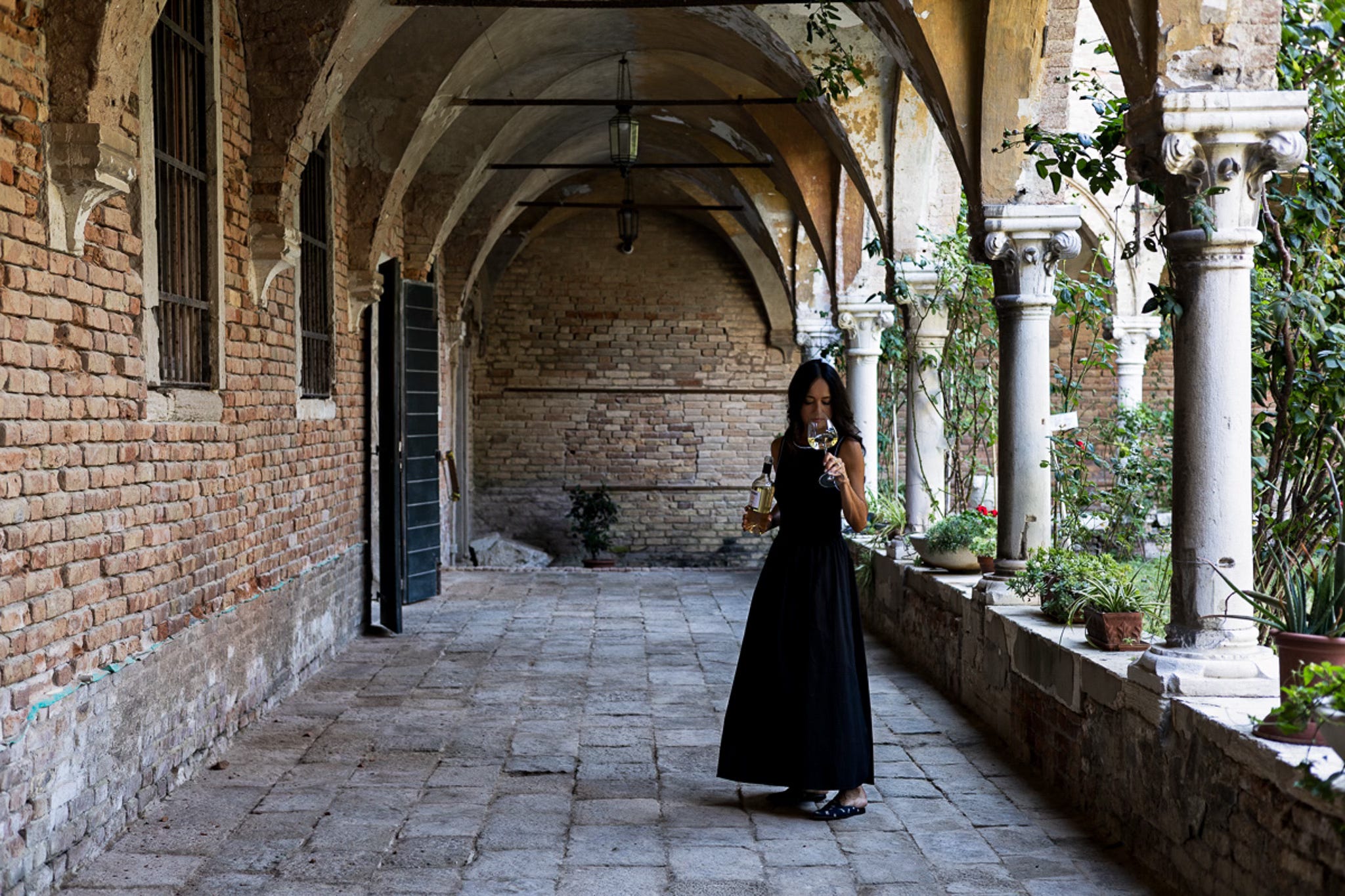
In the glass
Verbo Bianco
Malvasia Bianca IGP - 13% vol - 2023
Cantina di Venosa, Venosa (Potenza)
Grape: Malvasia Bianca di Basilicata - Soils: volcanic
Style: aromatic, fresh and savoury, with good persistence
Pairing
Buffalo burrata, roasted black figs, toasted hazelnuts, extra virgin olive oil, thyme and wild mint from the monastery garden
🔗 laurariolfatto.com
🍷 Malvasia Pop Up™
📖 Table Stories
If you’d like to receive my letters and updates from Malvasia Pop Up, you can subscribe to the newsletter here: https://www.laurariolfatto.com/newsletter
Portraits by Nicoletta Fornaro, with gratitude for her sensitive eye and for a creative collaboration that has grown over many years.
grazie per i tuoi racconti! una prospettiva unica e preziosa!