
Spring Table in Venice 🌱
Castraure, Mazzancolle and Malvasia Bianca from Molise

There are moments in the year when the Venetian lagoon moves in silence, almost without being noticed.
Late March and April are thresholds — times of transition and quiet transformation.
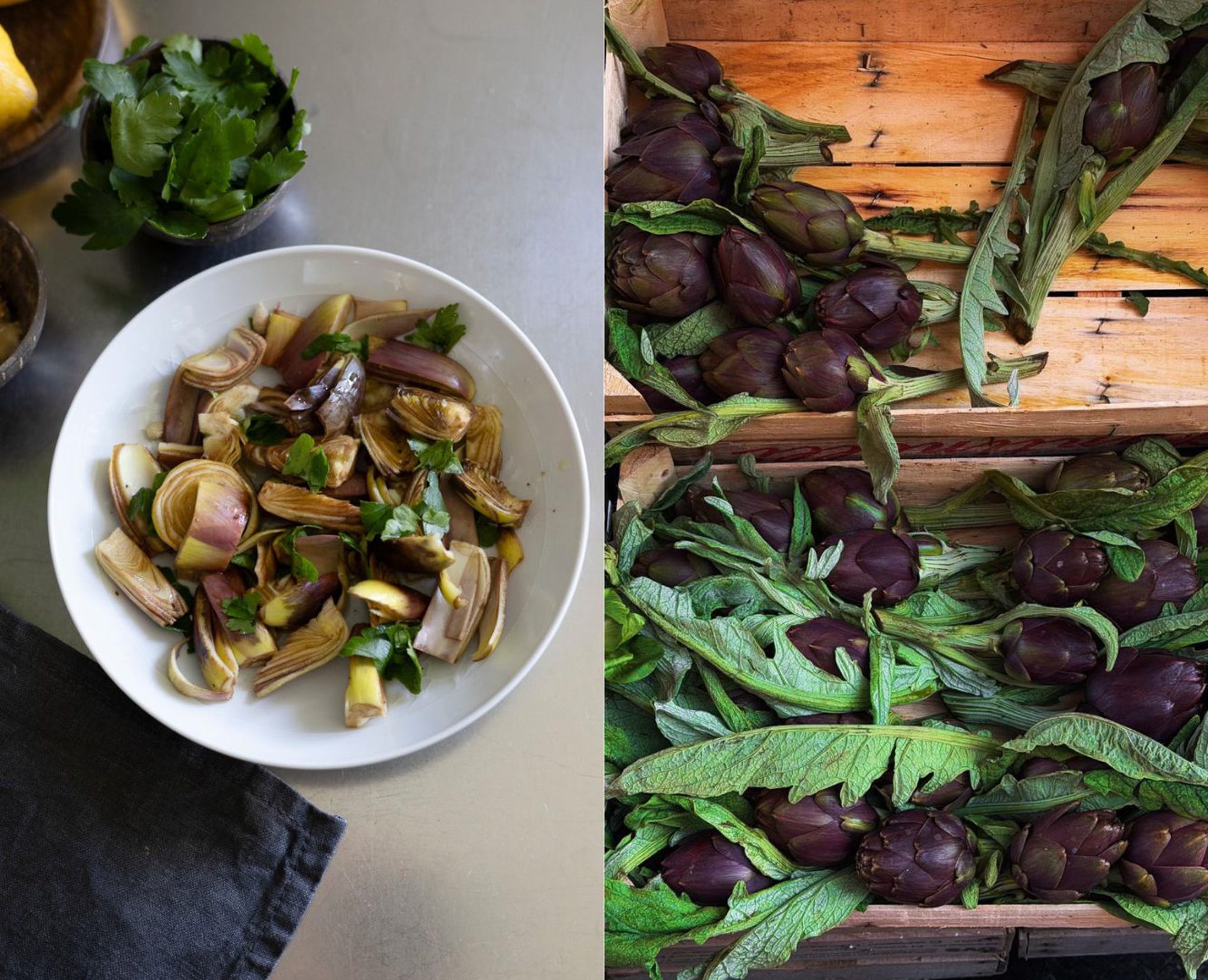
It is the season of castraure, the first buds of the violet artichoke from Sant’Erasmo Island — a unique and unmistakable product, now recognized as a Slow Food Presidio. A precious fruit of the lagoon’s soil, preserved thanks to the dedication of a few farmers who continue to safeguard an ancient and fragile knowledge.
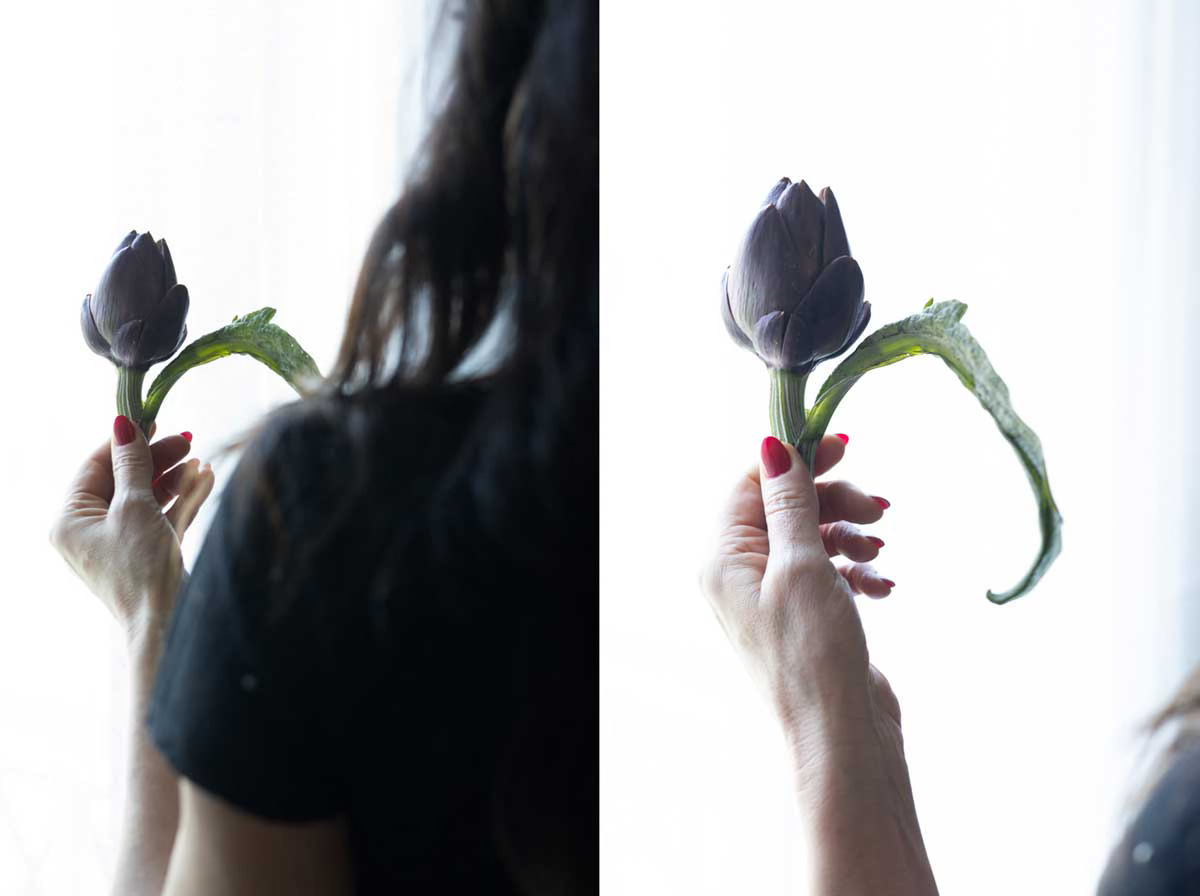
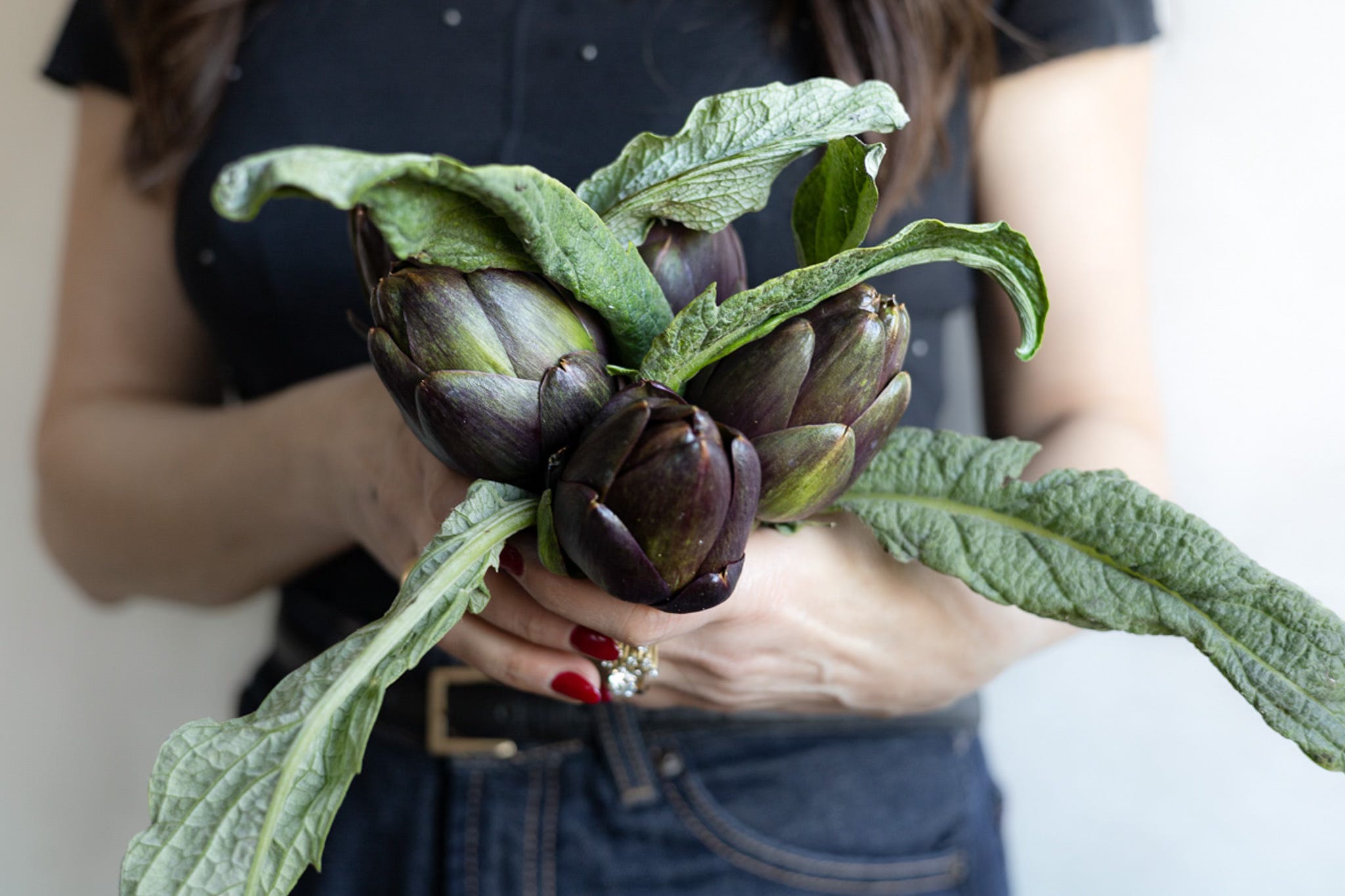
The violet artichoke has a deep, almost intense color and a compact, elegant structure. Yet it is in the castraure that its most delicate expression emerges.
They are the first buds to be harvested.
Crisp, tender, with a surprising sweetness, they hold a tension between freshness and essentiality that belongs only to what is born at the very beginning.
They last only a few days.
And for this reason, they are remembered.
In Venice, they appear on greengrocers’ stalls, their color bringing a quiet sense of joy and marking, discreetly, the beginning of the beautiful season.
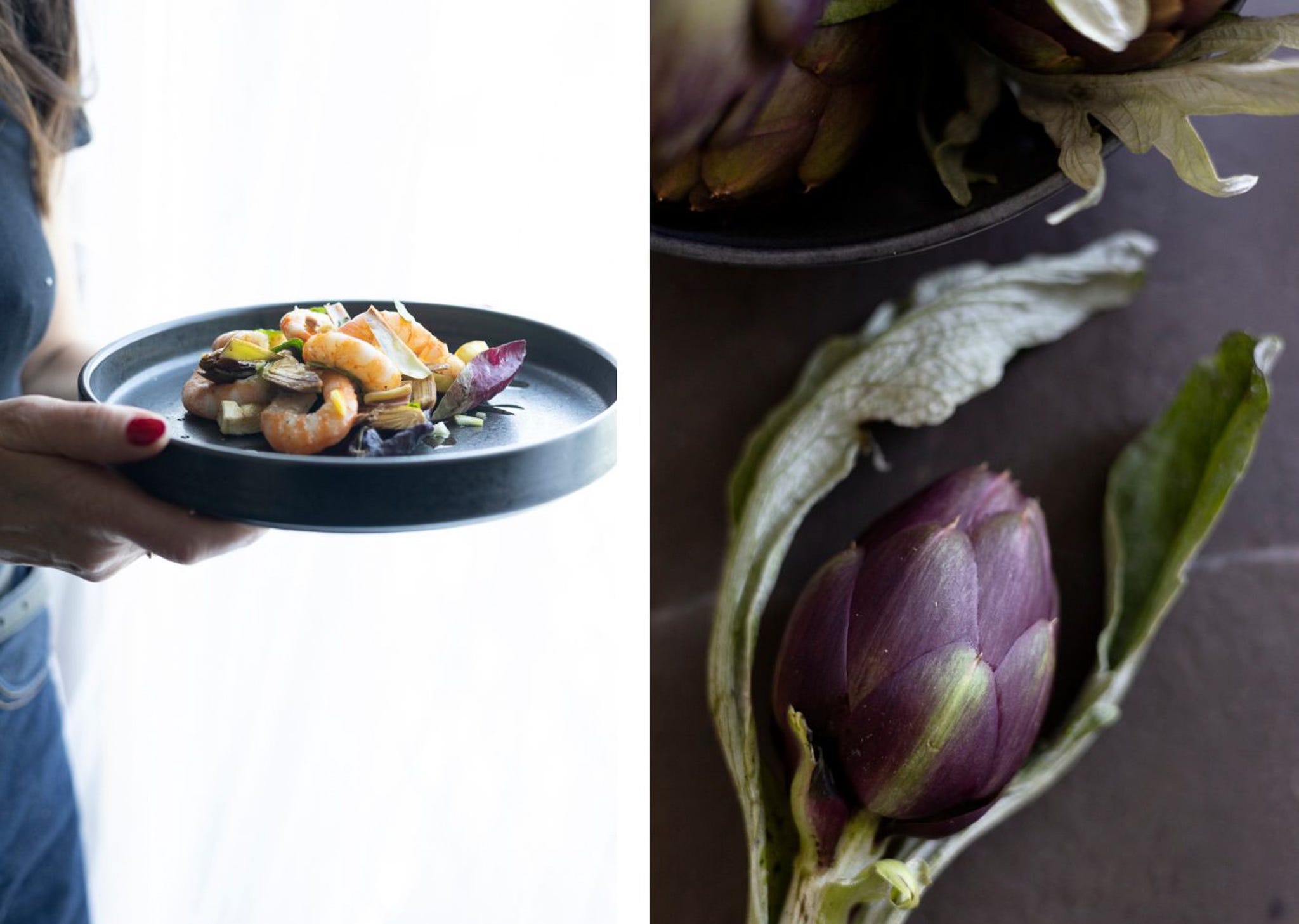
At the table, castraure do not need to be transformed, only accompanied.
The way I love them most is raw: thinly sliced, dressed with extra virgin olive oil and a few drops of lemon. A simple preparation that allows their herbaceous, luminous character to remain intact.
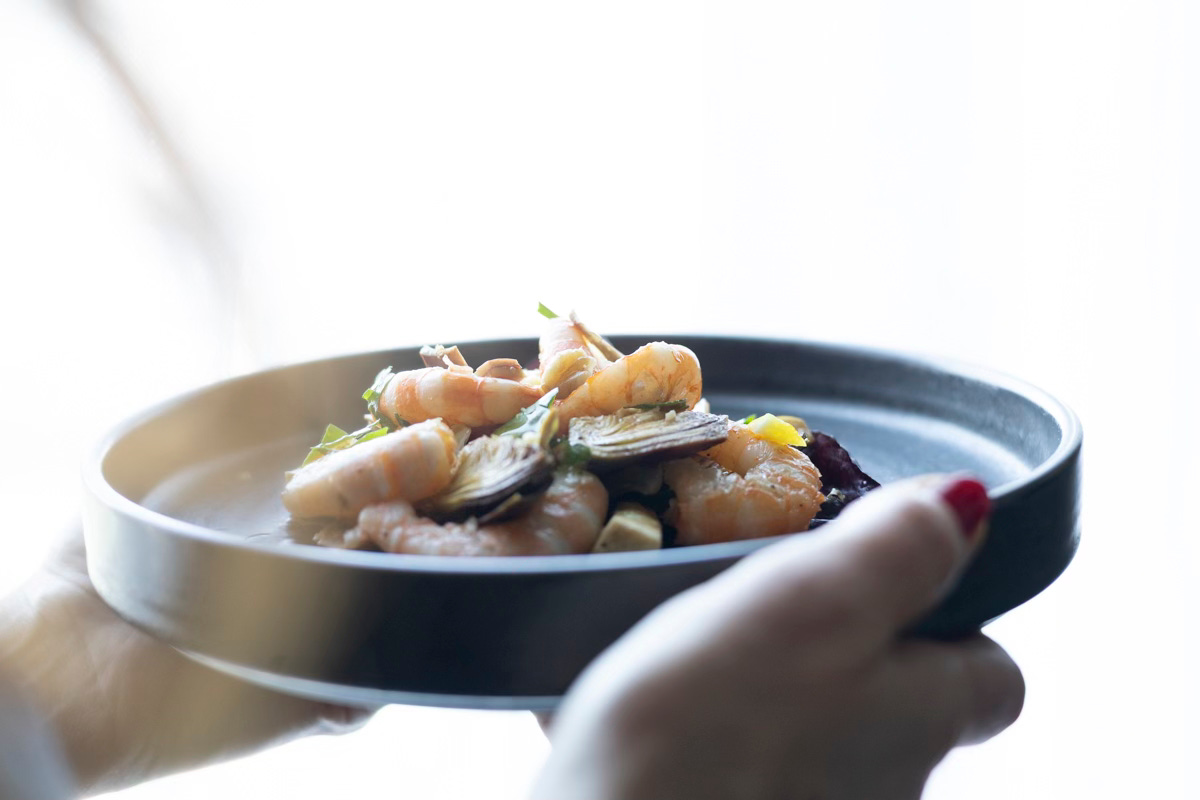
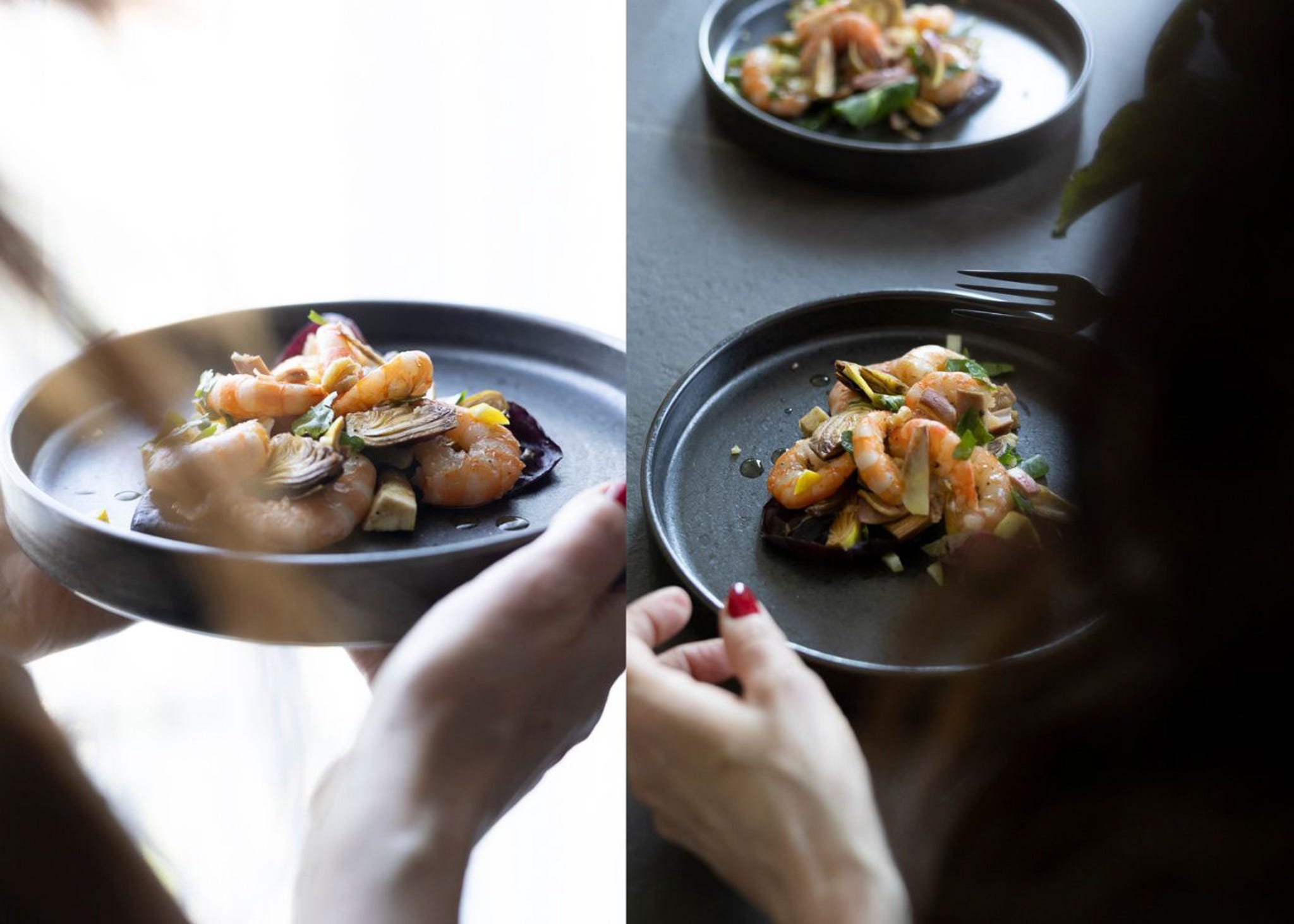
In early spring, I also imagine them like this: resting on a bed of mazzancolle.
Mazzancolle are caught off the Venetian coast precisely in this period, between March and April. Their flesh is sweet, full, almost velvety. A marine sweetness that meets the green, herbaceous notes of the artichoke, creating a subtle balance.
To complete the dish, just a touch of lemon — to bring light — and a leaf of mint, opening the palate. A composition that holds together land and water, vegetable and sea: a form of spring.
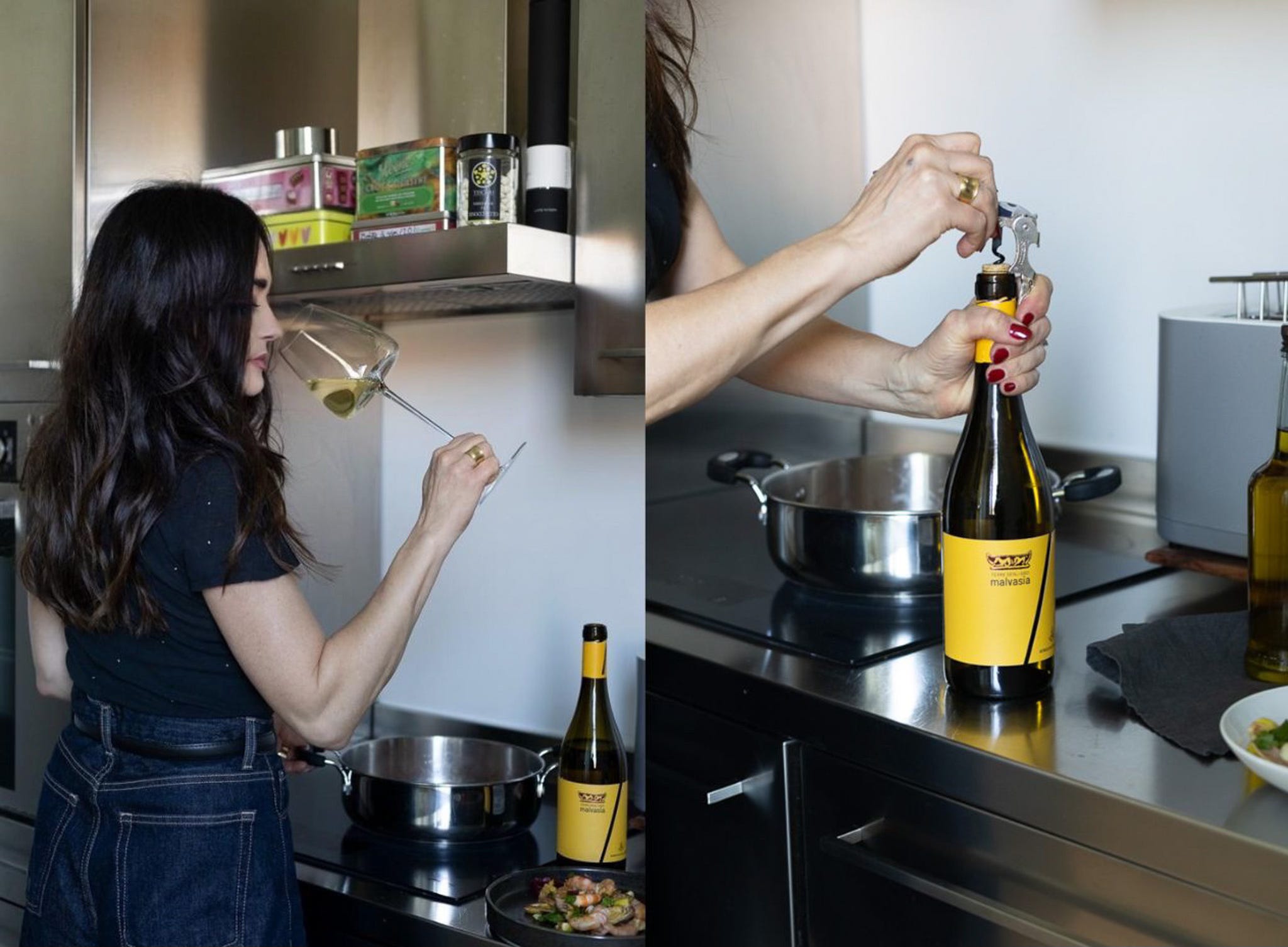
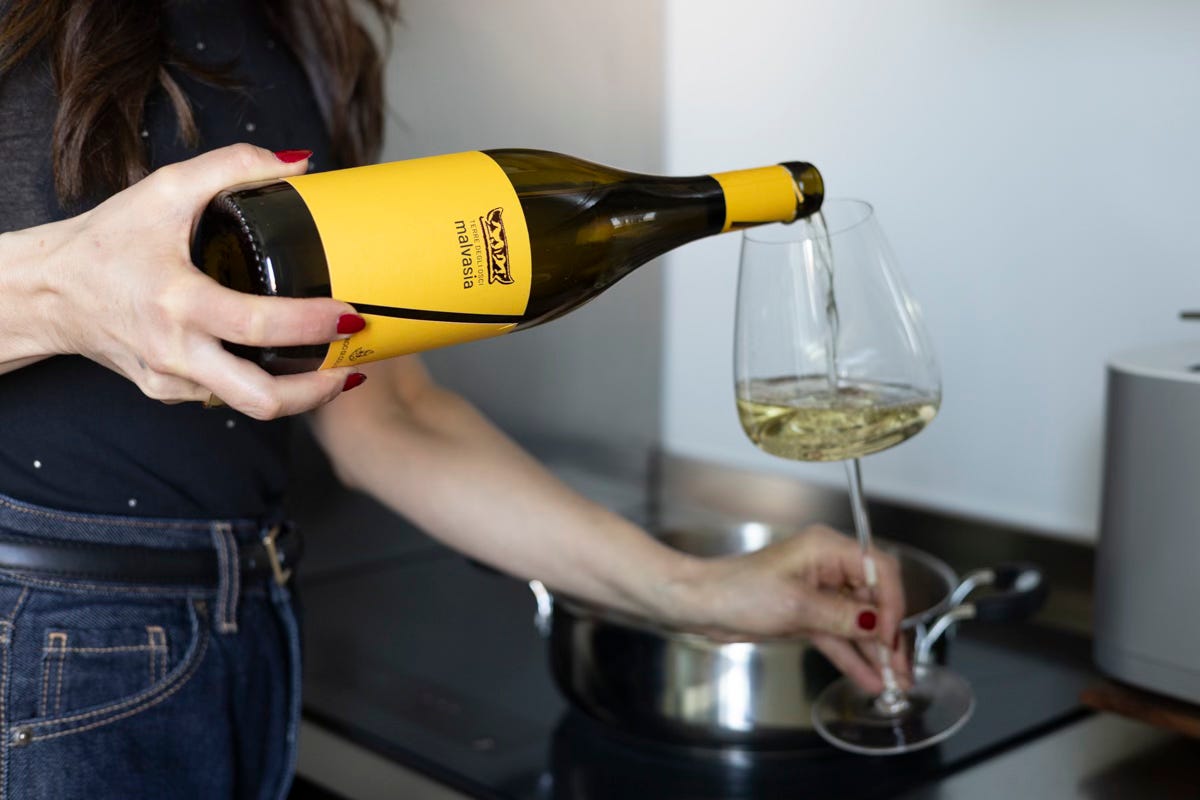
Within this balance, wine naturally finds its place.
A Malvasia Bianca from southern Italy, under the Terre degli Osci IGT denomination in Molise. An ancient land, whose name preserves the memory of the Osci, a pre-Roman people who once inhabited these hills, intertwining their history with that of the vine.
Here, between slopes facing the Adriatic Sea and the inland hills of the province of Campobasso, vineyards breathe light, wind, and sea air. It is an open, essential landscape, where Malvasia finds one of its most authentic expressions.
The wine moves through aromas of white flowers, freshly picked citrus, and yellow-fleshed fruit. Its freshness is vivid, precise, never intrusive. It accompanies without covering, supports without weighing down.
It is a wine that does not seek protagonism, but relationship.
And for this reason, it resonates naturally with the dish.
Castraure are not just an ingredient.
They are a moment.
They exist for only a few days, each year — always the same, always different. They cannot be held onto, nor replicated.
But it is in the glass that this moment finds its extension.
This Malvasia Bianca carries that same tension between freshness and light.
It is vibrant, expressive, and deeply alive — a wine that doesn’t ask for attention, yet captures it completely.
I love it for its energy, for its precision, for the way it holds both delicacy and presence.
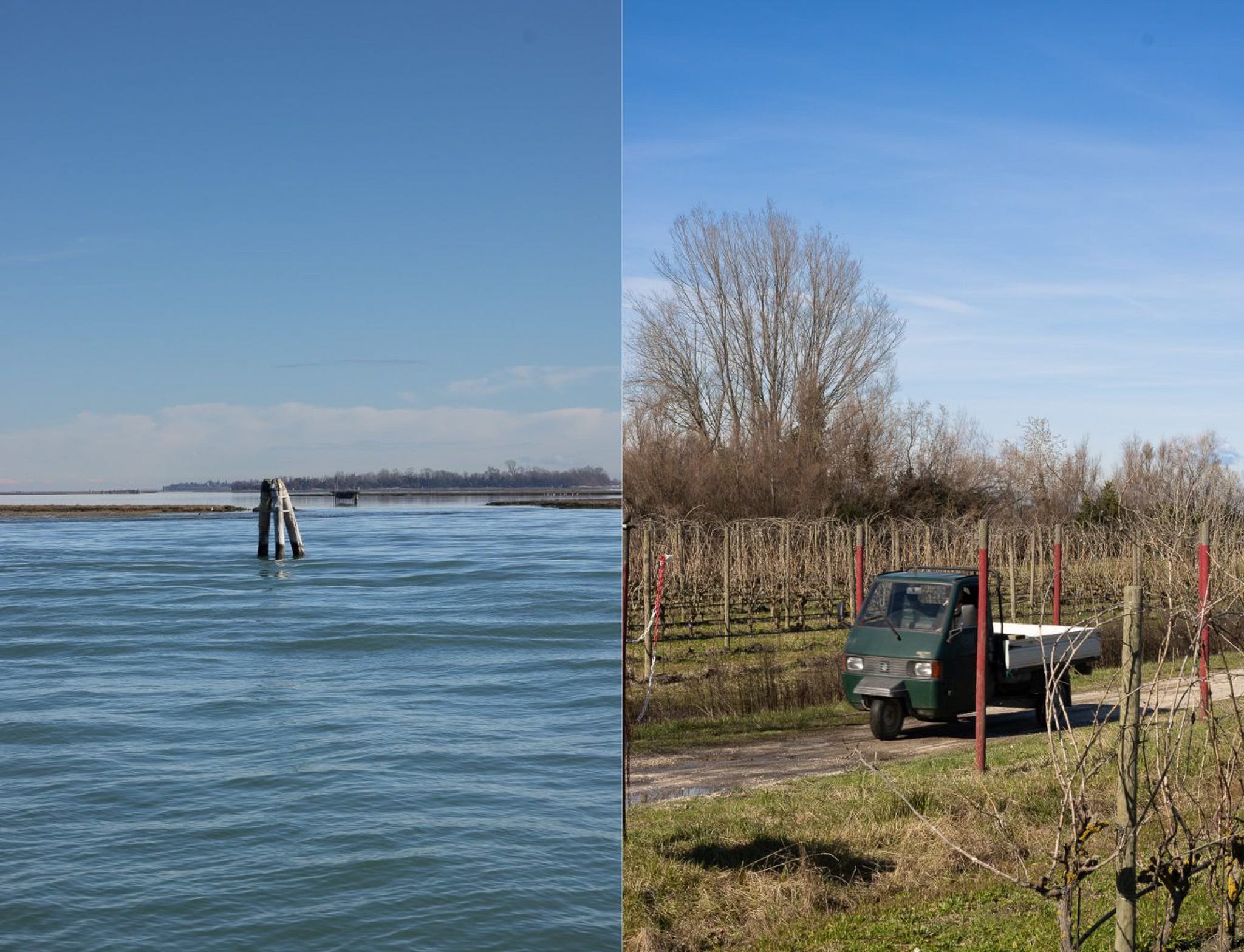
Let yourself be guided by a quiet journey to Sant’Erasmo Island. Walk slowly among vineyards and rows of violet artichokes, where time seems to stretch and soften. Here, only a few residents remain, moving gently through the landscape in their small Ape cars—true custodians of an island that has long been known as the vegetable garden of Venice, offering its first fruits to the city for centuries.
Laura Riolfatto
Wine storyteller & sommelier
🔗 laurariolfatto.com
🍷 Malvasia Pop Up
📖 Table Stories
📍 Venice / Innichen
If you’d like to receive my letters and updates from Malvasia Pop Up, you can subscribe to the newsletter here:
👉 https://www.laurariolfatto.com/newsletter