
In accounts of traditional Venetian food, bread often appears alongside whatever the season had to offer: pan e fich, pan e ua - bread and figs, bread and grapes. It was not really a recipe, but rather a simple snack, something to eat while working, a natural way of combining the most everyday of foods with the fruit of the season. The same custom can be found in other parts of Italy, especially around harvest time, when grapes were plentiful and went straight from the vineyard to the table. In Tuscany, it became a dish in its own right, pan con l’uva, or schiacciata con l’uva: bread dough, dark wine grapes, sugar and olive oil, still prepared today between September and October. I also remember my maternal grandmother, who during the grape harvest in the Euganean Hills used to eat bread and grapes. They are two foods that work surprisingly well together. The bread absorbs the juice of the grapes, softening their sweetness while somehow making it more noticeable; the grapes give the bread what it lacks: juiciness and aroma. A pairing made from humble ingredients, yet rich and lingering in flavour.
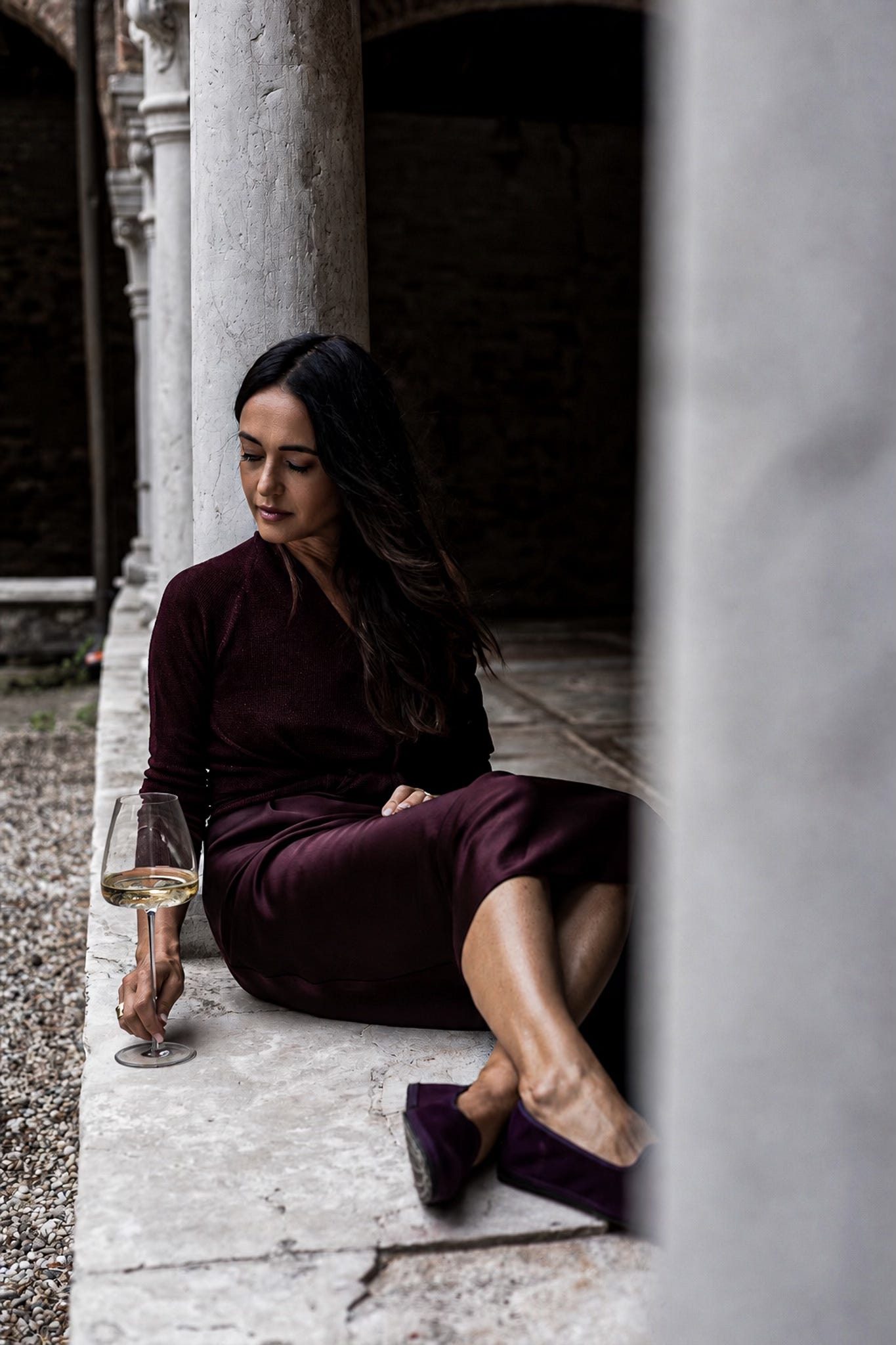
This September, a month of extraordinary beauty, I brought bread, grapes and wine together in a very special place, hidden away in the Castello district at San Francesco della Vigna. Today, we come here thinking of the church, Sansovino, Palladio, its chapels and cloisters and the works of art it preserves, including Bellini. But its story began long before the sixteenth-century architecture, and its name should be taken quite literally: there really was a vineyard here, perhaps the oldest in the city of Venice.
In 1253, Marco Ziani, son of Doge Pietro Ziani, left the Friars Minor a plot of land in the area of Santa Giustina, together with a vineyard, several houses and a small church. The Franciscans settled here, and over the centuries the complex changed profoundly. In the sixteenth century, the old church was replaced by the one designed by Jacopo Sansovino, and a few decades later Andrea Palladio designed its façade. The word vigna - vineyard - however, remained in its name, a memory of what existed here before, and of a lesser-known Venice. We are accustomed to imagining Venice as a city of stone built on water, densely inhabited and dependent on the mainland for its food. In reality, cultivated spaces survived within the city itself: vegetable gardens, orchards, gardens, fruit trees and vineyards. They could not feed an entire city, of course, but they were part of its landscape and its economy. Vines also grew on the islands of the Lagoon, alongside the far greater quantities of wine that arrived from the mainland and across the Adriatic.
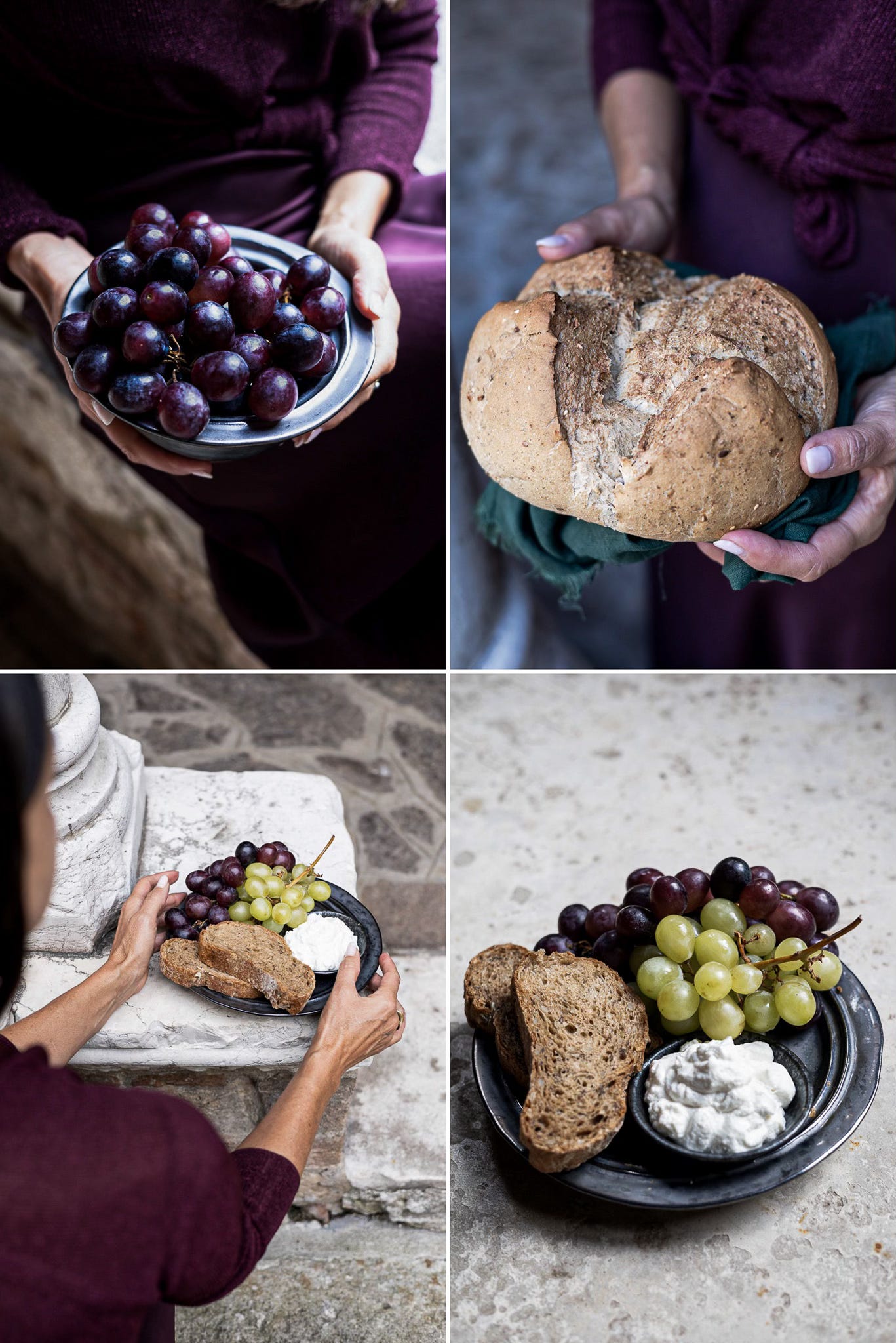
To enter the cloisters of San Francesco della Vigna is to find oneself in one of the few places where it is still possible to imagine the real Venice: not only calli, palazzi and canals, but cultivated land as well. And it is here that grapes become the protagonists, because in September they can still be eaten simply with bread, but they are also the fruit from which wine is born. And when speaking of wine in Venice, sooner or later we come across a word that, throughout the city’s history, has meant far more than the name of a grape variety: Malvasia.
The word takes us far from the small vineyard of Castello, towards the eastern Mediterranean and Monemvasia, the fortified town in the Peloponnese from which the name derives. Along Venetian trade routes, wines known as Malvasia arrived in Venice and became so important that the name eventually came to identify the places where they were sold: the malvasie, osterie specialising in wines considered more prestigious than ordinary table wines. Wine in Venice had its own precise geography: local wines, wines from the mainland, and the vini navigati, wines that had travelled by sea from Greece, the islands, Candia and the other territories connected by the routes of the Serenissima. Malvasia belonged to this second world, and its presence became so deeply rooted in the city that traces of it can still be found while walking through Venice today: Calle della Malvasia, Ponte della Malvasia, names that preserve the memory of those wine shops long after the shops themselves disappeared.
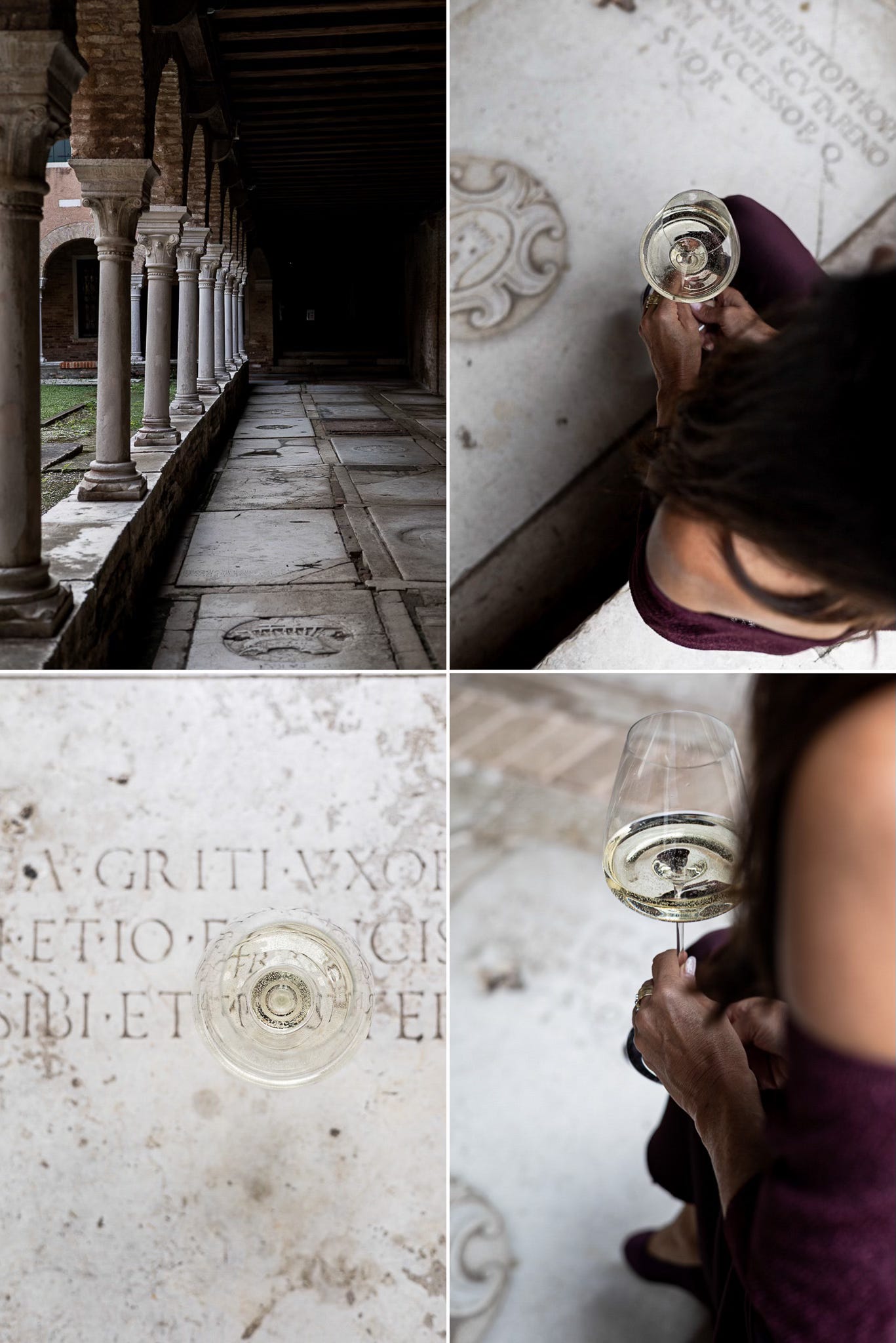
And it is curious to find Malvasia here again today. Vines of this variety have also been reintroduced into the convent’s vineyard. This does not mean that Malvasia has been cultivated here continuously since the Middle Ages — the historical sources do not allow us to make such a claim. Rather, it is a contemporary return, bringing this variety back into a place where the vine is embedded in its history, and even in its name.
And so, this September at San Francesco della Vigna, Pane, Uva e Malvasia come together to tell three different stories. Bread and grapes belong to the memory of a simple way of eating, one that survived in rural traditions until generations close to our own. The vineyard tells the story of a Venice that still had land under cultivation within the city itself. Malvasia takes us beyond the Lagoon, towards the Mediterranean and the network of exchanges that, for centuries, brought goods, people, words and wine to Venice.
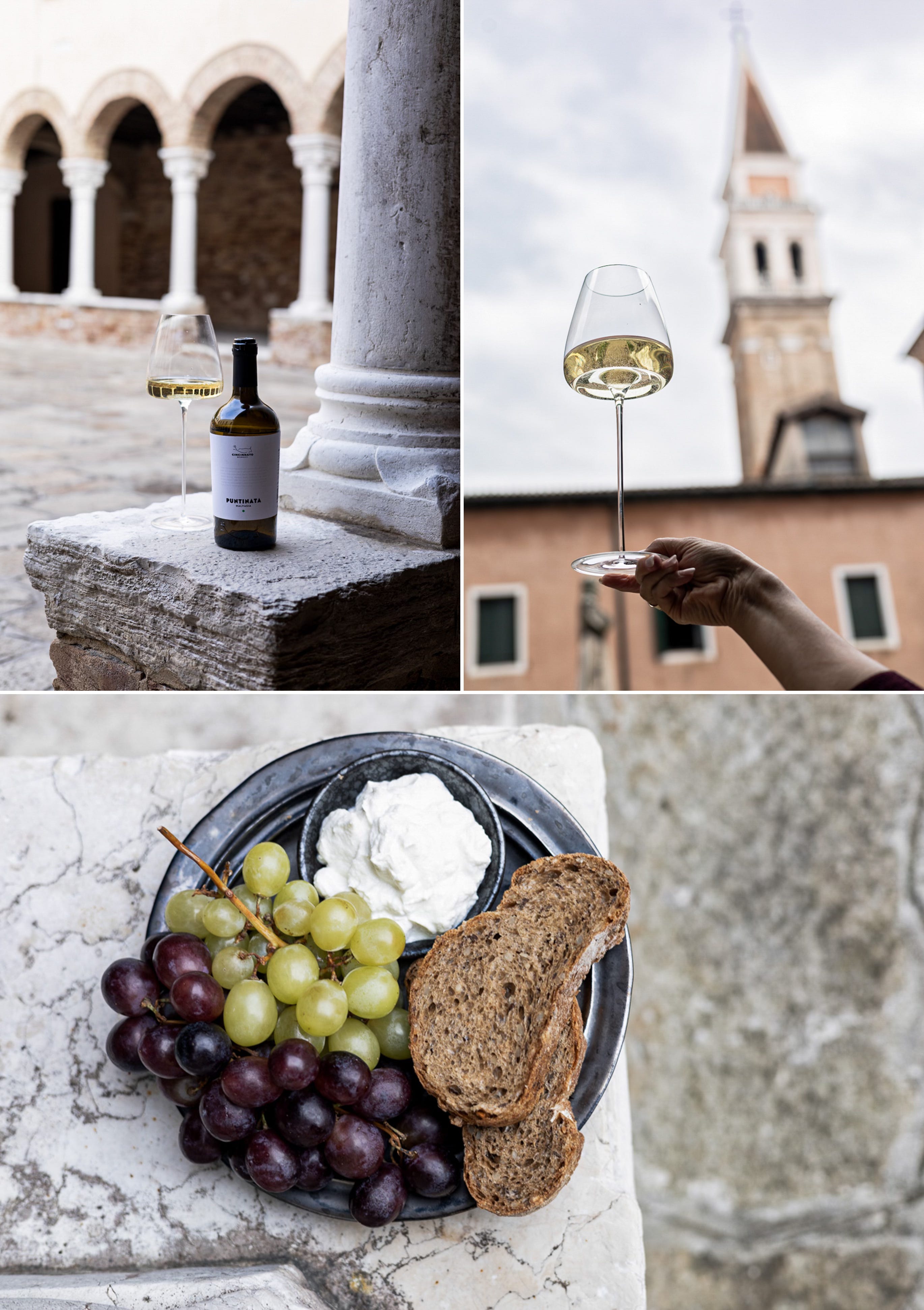
At the heart of this story is one of Italy’s nineteen Malvasia varieties. For this occasion, I chose Malvasia Puntinata, intrigued by the wine produced by Cincinnato in Cori. Its very name tells us something: Puntinata is the name commonly used for Malvasia Laziale, referring to the tiny dark spot that appears on the grape as it ripens, a minute detail, almost like a signature. It is an ancient grape variety, rooted in the volcanic hills of Lazio. For years it was neglected, replaced in many vineyards by varieties that were less sensitive and more profitable. Fortunately, today it is enjoying renewed interest, and in Cori it is once again being grown and vinified as a single variety, a small act of loyalty to a grape that many had stopped believing in.
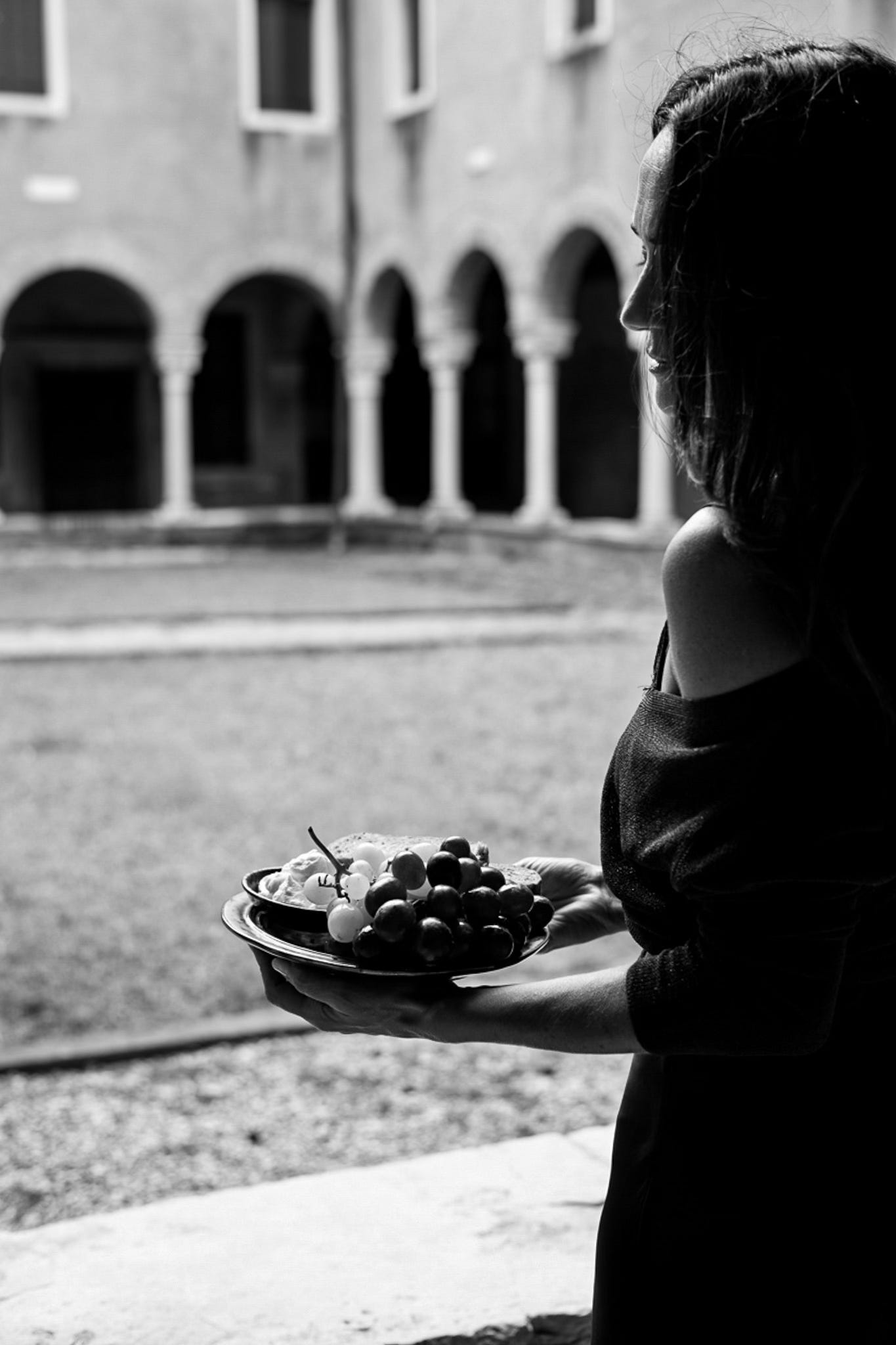
In the glass, I found it extremely elegant, soft and refined, far removed from the exuberant aromatic character often associated with the name Malvasia. More whispered than declared, yet surprisingly appealing, capable of making an impression and leaving its mark. With bread, fresh grapes and goat’s milk ricotta cream, everything seemed to find a natural balance: the softness of the cheese, the juicy sweetness of the grapes and the simplicity of the bread accompanied the delicacy of the wine without overwhelming it.
I find this mosaic of Italian Malvasias extraordinary: each time, they surprise me with their differences, with the diversity of the territories they express and with their many aromatic interpretations. No two are alike, and perhaps that is precisely what fascinates me most about my research. Simply extraordinary.
In the glass
Puntinata
Malvasia Puntinata IGT Lazio - 13% vol - 2025
Cincinnato, Cori (Latina)
Grape: Malvasia Puntinata 100% - Soils: volcanic and clay
Style: elegant, soft and refined, fresh and savoury, with a subtle aromatic profile
Pairing
Bread, fresh grapes and goat’s milk ricotta cream
Cincinnato is a cooperative founded in 1947 at the foot of the Lepini Mountains, surrounded by vineyards and olive groves. Its Puntinata grows between 200 and 250 metres above sea level, on lava hills and volcanic-clay soils overlooking the Pontine coast, a land that still carries the memory of fire beneath the vines.
🔗 laurariolfatto.com
🍷 Malvasia Pop Up™
📖 Table Stories
If you’d like to receive my letters and updates from Malvasia Pop Up, you can subscribe to the newsletter here: https://www.laurariolfatto.com/newsletter
Portraits by Nicoletta Fornaro, with gratitude for her sensitive eye and for a creative collaboration that has grown over many years.
Meravigliosa!!!!!
Beautiful history. For readers who want to see a working vineyard in the lagoon today, Venissa on Mazzorbo, just over the bridge from Burano, grows the native Dorona grape inside a walled vineyard that's open to the public.