
When I began exploring the world of Italian Malvasia wines, one of the most interesting discoveries was the existence of black-skinned Malvasia varieties. We tend to associate the name mainly with white wines, but behind the word Malvasia lies a range of very different grape varieties, grown in distant regions and capable of producing wines that do not necessarily have much in common. Among them is Malvasia di Schierano, an aromatic grape variety from Piedmont that intrigued me from the very first tasting. It is a black-skinned variety, mainly associated with the hills of the Asti area and a tradition of sweet wines that deserves to be rediscovered today.
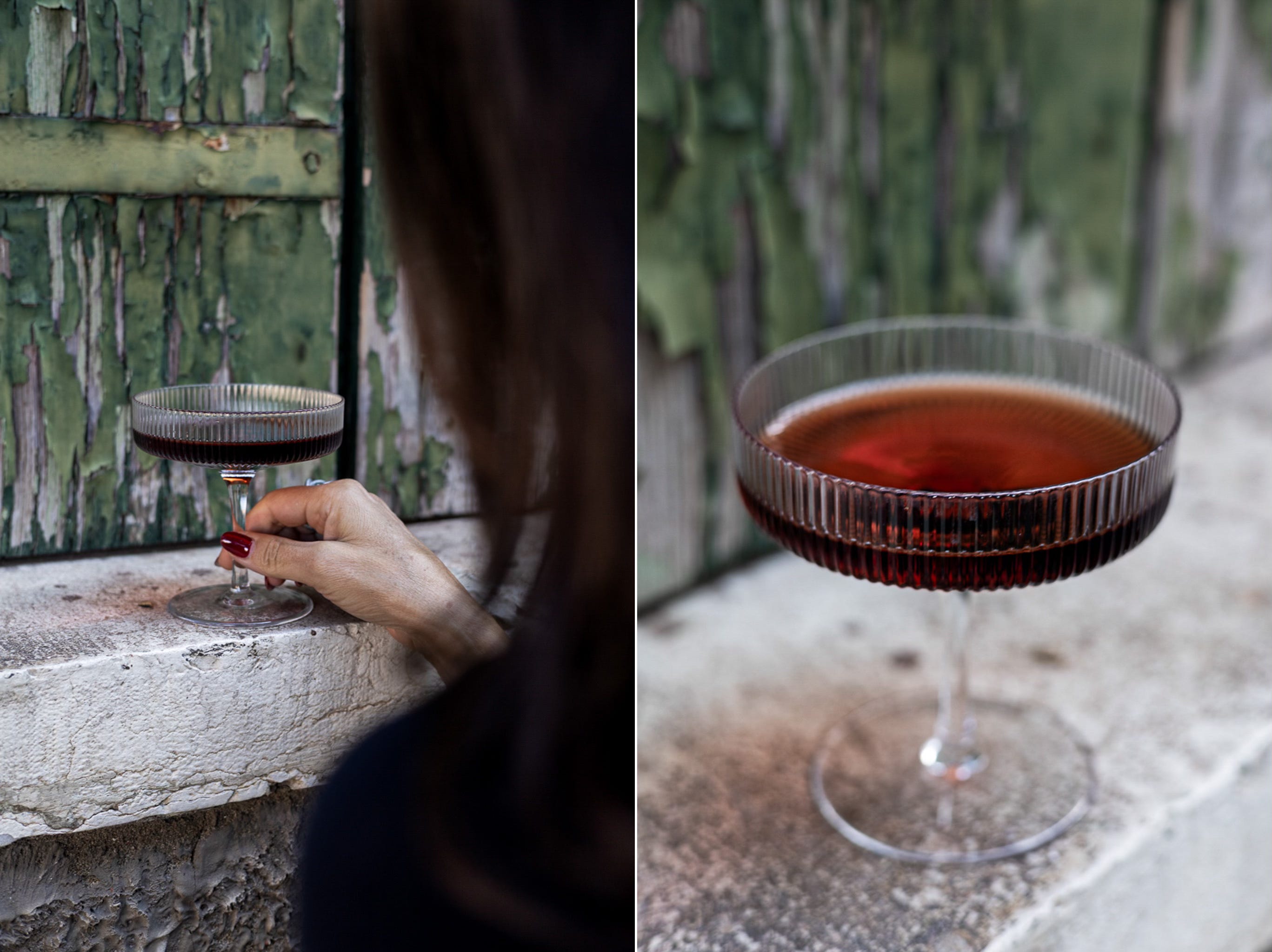
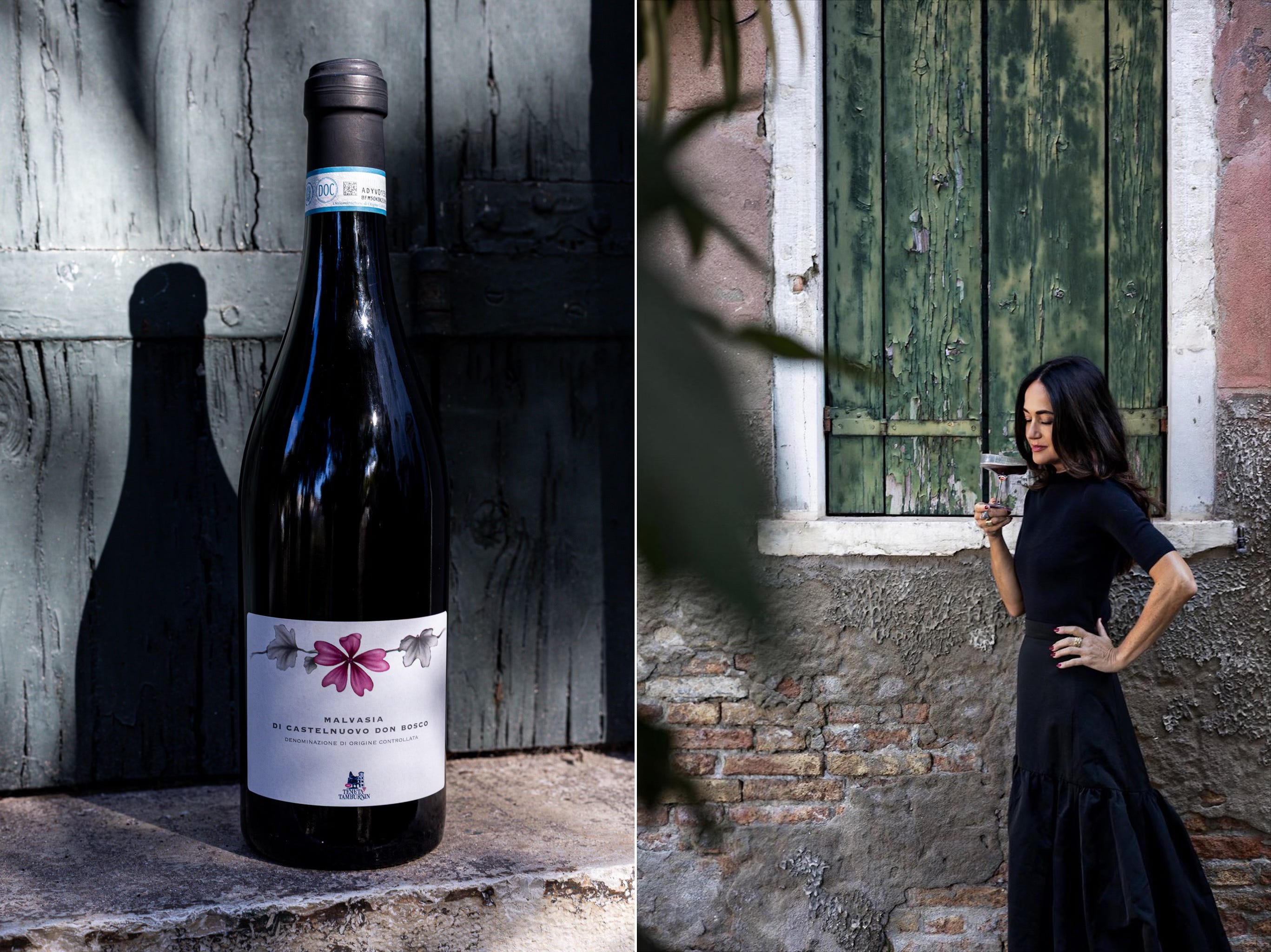
For this new edition of TABLE VENICE, I have chosen La Leggiadra 2025 by Tenuta Tamburnin, a Malvasia di Castelnuovo Don Bosco DOC made exclusively from Malvasia di Schierano grapes, in its sweet expression. I wanted to explore a wine that retains a strong varietal identity and whose aromas offer a rather different interpretation of what we usually associate with Malvasia. In the glass, it shows a cherry-red colour with violet reflections. Its aromatic character is mainly floral, particularly reminiscent of wild rose, alongside notes of raspberry and other small red berries. It is precisely this floral character, so distinctive of Malvasia di Schierano, that makes it recognisable and sets it apart from many other sweet red wines.
When considering what to pair with it, I chose a sweet that I have known for a long time and that belongs to the memory of Venetian pastry-making: the spumiglia.
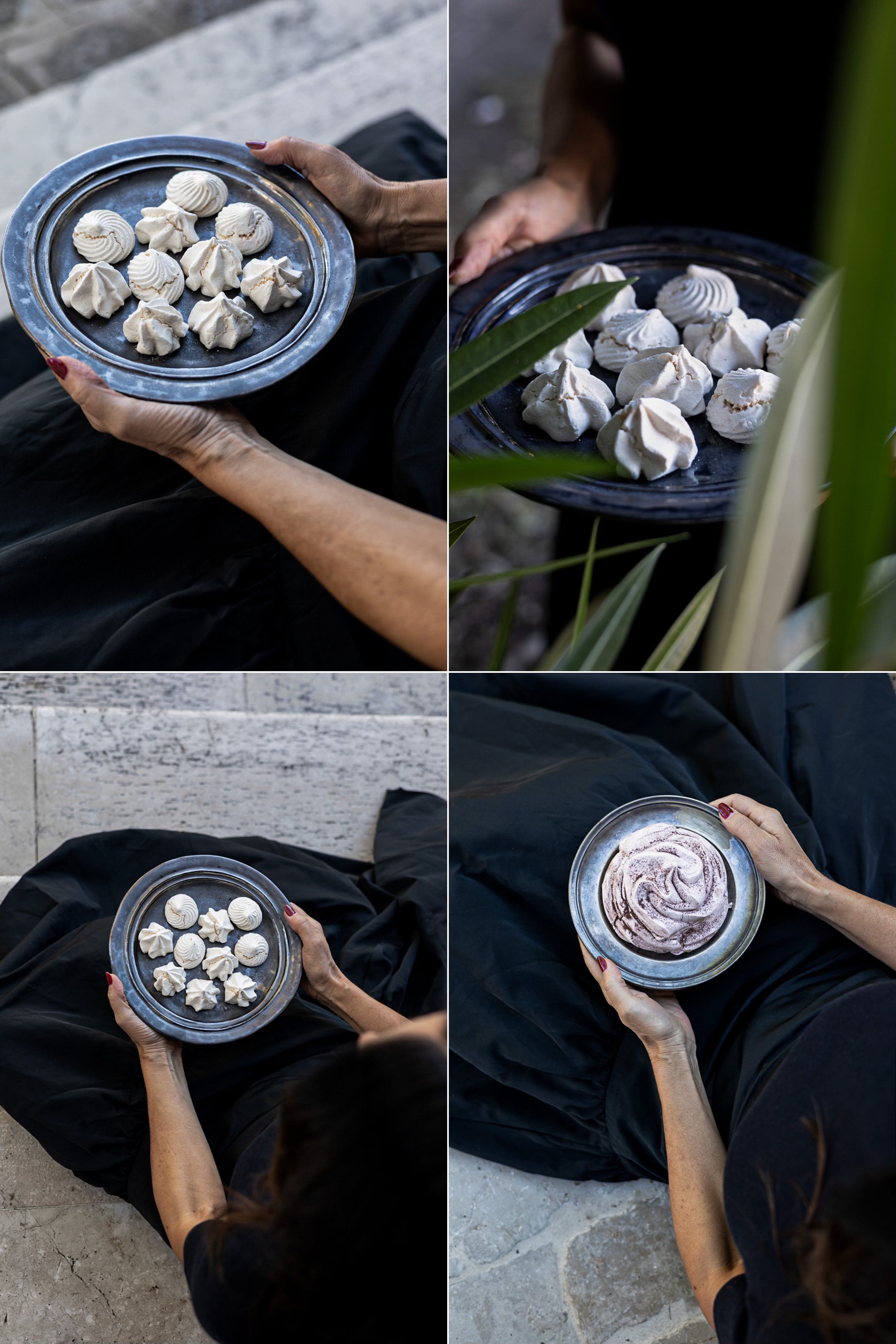
Spumiglia is a simple preparation, made by whipping egg whites with sugar and allowing them to dry slowly in the oven. It belongs to the wider European tradition of meringue, but in Venice it has found a special place among the sweets of the city’s historic pastry shops. Its irregular shapes, slightly cracked surface and delicate, crumbly texture are instantly recognisable. When I think of Venetian spumiglie, I also think of Franco Colussi, known as Nono Colussi, and his pastry shop in Calle Lunga San Barnaba, which opened in 1956. Colussi belongs to a generation of artisans who helped preserve the city’s recipes and customs at a time when Venice was already undergoing significant changes.
Neighbourhood pastry shops played a different role then from the one we often associate with them today. They were not simply places to buy something sweet, but part of residents’ everyday lives. Their counters offered preparations associated with family celebrations, holidays and domestic traditions, often passed down without ever needing to be written down. This is another reason why the history of spumiglia interests me. It is not a sweet that originated in Venice, yet it became part of the city’s tradition. After all, Venetian cuisine also developed through encounters with ingredients and preparations from other places. The city embraced them, adapted them and incorporated them into its eating habits, until they became part of its identity.
There is another aspect that particularly intrigues me, the old custom of serving dry pastries with sweet wine, sometimes dipping them directly into the glass. Accounts relating to Venetian pastry traditions also refer to wine from Cyprus, recalling the long-standing commercial ties between Venice and the eastern Mediterranean. There is not enough evidence to establish that this wine was necessarily Malvasia, but the reference offers an interesting insight into the presence of wine in even the smallest rituals of the table.
My pairing with Malvasia di Schierano, on the other hand, is a contemporary choice.
Spumiglia has a pronounced sweetness, a very light structure and a texture that tends to dissolve quickly in the mouth. To accompany it, a wine needs to hold its own against the sugar while also offering aromatic complexity. The sweet expression of Malvasia di Schierano makes it possible to explore precisely this balance: the sweetness of the wine complements that of the dessert, while its floral and fruity aromas bring another dimension to the tasting.
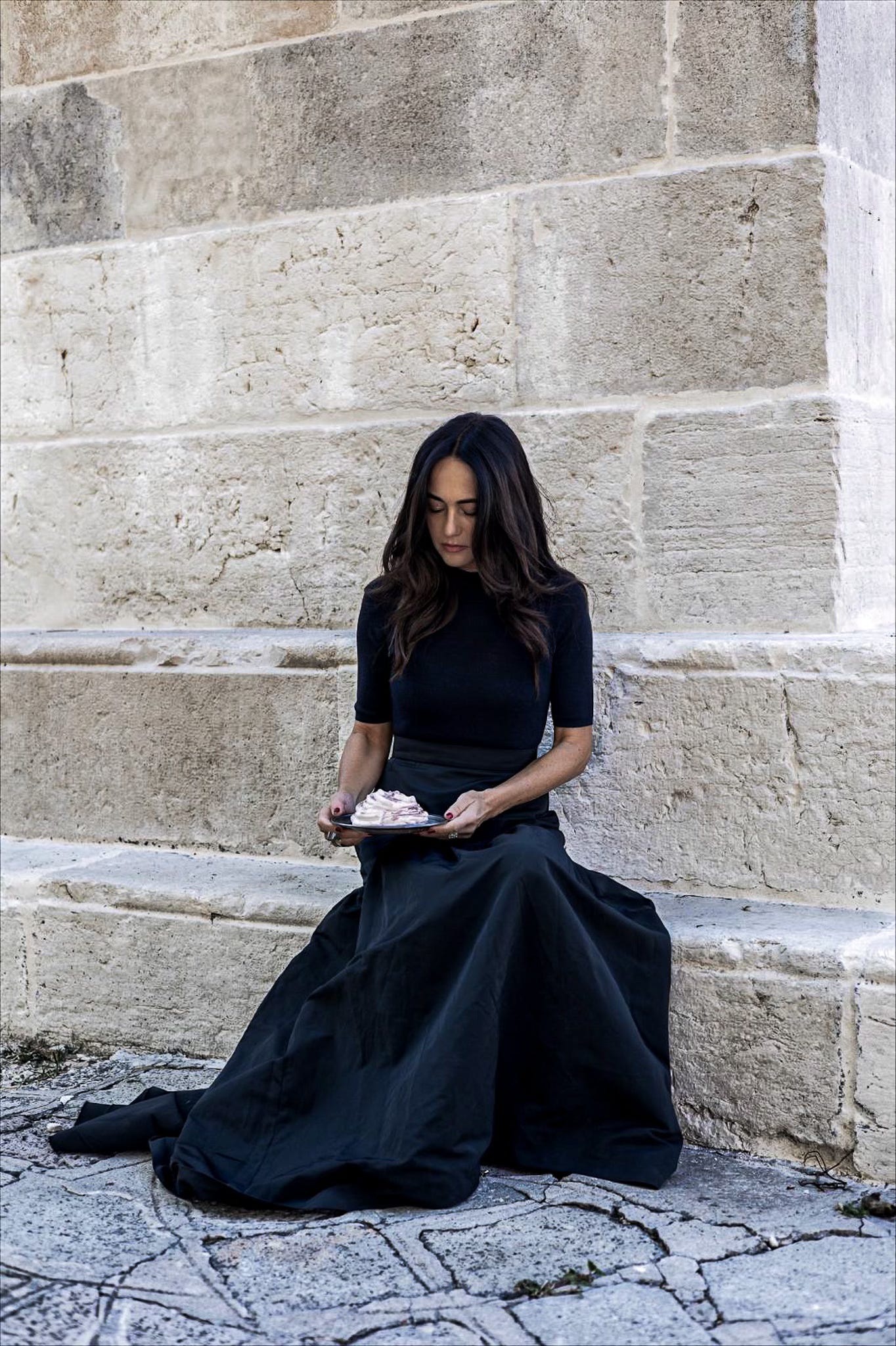
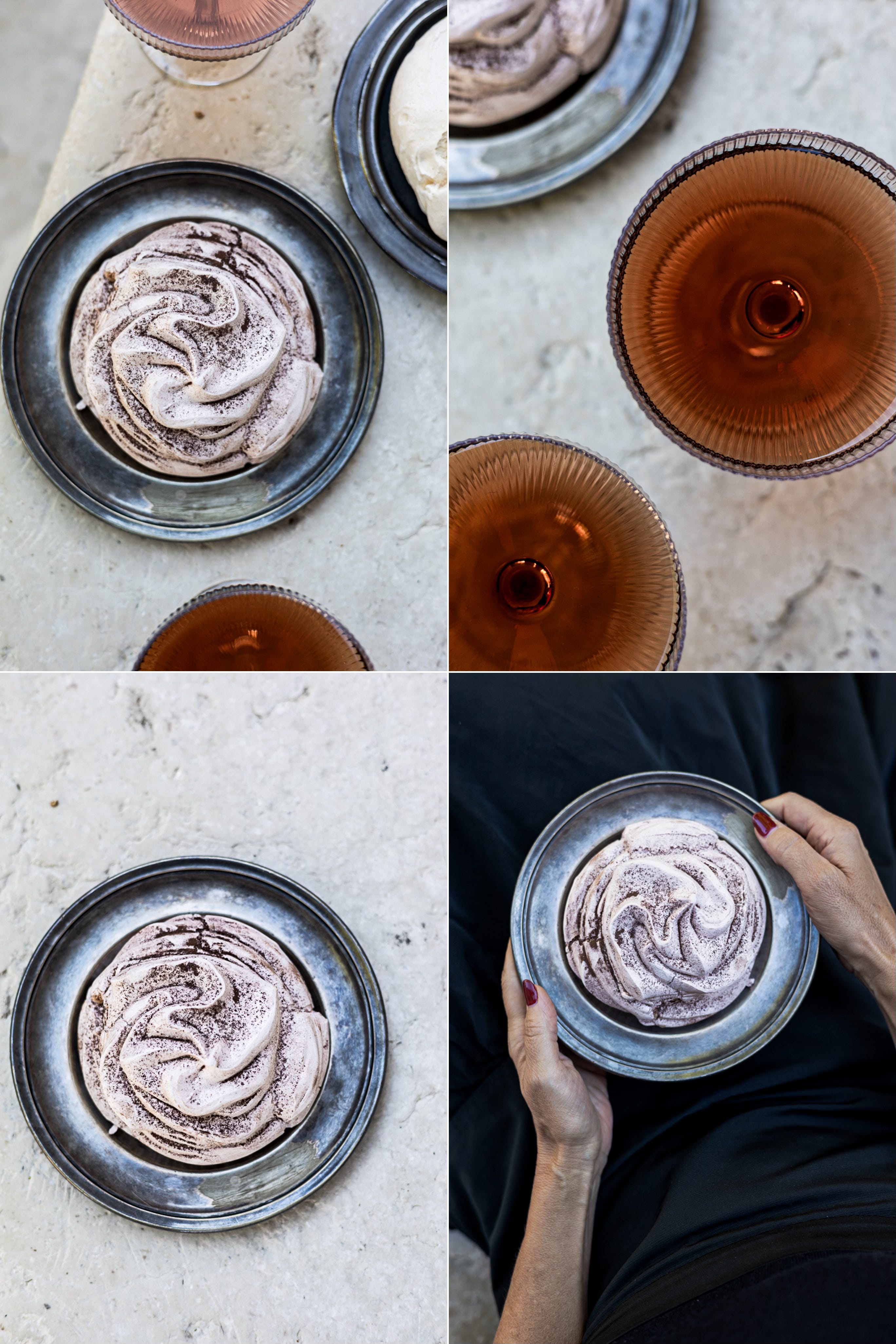
The photographs taken in San Pietro di Castello on an autumn day capture the simplicity of this encounter, an old metal platter, a few spumiglie and a glass of red Malvasia. Malvasia di Schierano comes from Piedmont, spumiglia belongs to a pastry tradition that extends across Europe, and the memory of Franco Colussi takes us back to the Venice of small shops and neighbourhood pastry makers.
A pairing that does not attempt to recreate the past, but offers an opportunity to discover a wine and, through a simple sweet, rediscover a fragment of Venice’s gastronomic culture.
In the glass
La Leggiadra
Malvasia di Castelnuovo Don Bosco DOC - 6% vol
Tenuta Tamburnin, Castelnuovo Don Bosco (Asti), Piedmont
Grape: 100% Malvasia di Schierano - Soils: iron-rich clay and red clay
Style: sweet, delicately aromatic and fresh, with notes of wild rose and raspberry.
Pairing
Traditional Venetian spumiglie, delicate meringues with a crisp, airy texture, alongside a cocoa-dusted variation.
Dating back to the eighteenth century, Tenuta Tamburnin lies among the rolling hills of Basso Monferrato. Its vineyards form a natural amphitheatre around the historic estate, rooted in iron-rich red clay soils. Here, the aromatic Malvasia di Schierano finds an expression of remarkable fragrance, bringing together the scents of wild roses and raspberries with the gentle sweetness of this historic Piedmontese wine.
🔗 laurariolfatto.com
🍷 Malvasia Pop Up®
If you’d like to receive my letters and updates from Malvasia Pop Up, you can subscribe to the newsletter here: https://www.laurariolfatto.com/newsletter
Portraits of me by Nicoletta Fornaro, with gratitude for her sensitive eye and for a creative collaboration that has grown over many years.